

1/18


Recently active

Trusted teacher
This teacher has a fast response time and rate, demonstrating a high quality of service to their students.

Since July 2026
Instructor since July 2026
Maîtrisez l’IA,

From 14 £ /h

A- SUJETS QUE VOUS POUVEZ EXPLORER ET MAÎTRISER :
1- FONDEMENTS DE PYTHON
• Variables, types de données, opérateurs, structures conditionnelles, boucles, fonctions, modules, fichiers, exceptions et programmation orientée objet
• Listes, tuples, dictionnaires, ensembles, compréhensions, débogage et écriture d’un code clair, réutilisable et bien structuré
• Jupyter Notebook, Anaconda, Visual Studio Code, environnements virtuels et gestion des packages
2- PRÉPARATION ET EXPLORATION DES DONNÉES
• NumPy et pandas pour importer, nettoyer, transformer, filtrer, regrouper, restructurer et fusionner les données
• Valeurs manquantes, doublons, valeurs aberrantes, formats incohérents, fuite de données (data leakage) et validation de la qualité des données
• Analyse exploratoire des données à l’aide de statistiques descriptives, Matplotlib, Seaborn et interprétation graphique
3- FONDEMENTS MATHÉMATIQUES
• Algèbre linéaire, vecteurs, matrices, dérivées, optimisation, probabilités et statistiques
• Fonctions de perte, gradients, mesures de distance, régularisation, vraisemblance et complexité des modèles
• Les concepts mathématiques sont expliqués en fonction du niveau de l’apprenant et des exigences des algorithmes sélectionnés
4- APPRENTISSAGE AUTOMATIQUE SUPERVISÉ
• Régression linéaire et polynomiale, régression logistique et modèles régularisés
• k plus proches voisins (k-nearest neighbours), arbres de décision, forêts aléatoires, gradient boosting, machines à vecteurs de support et classificateur naïf de Bayes
• Classification, régression, hypothèses des modèles, frontières de décision, importance des variables et interprétation des résultats
5- APPRENTISSAGE NON SUPERVISÉ
• Regroupement (clustering) par k-means, classification hiérarchique et méthodes fondées sur la densité
• Analyse en composantes principales, réduction de dimensionnalité, détection d’anomalies et découverte de structures ou de motifs
• Sélection des méthodes, évaluation de la structure des données et interprétation des résultats sans étiquettes prédéfinies
6- ÉVALUATION ET AMÉLIORATION DES MODÈLES
• Jeux d’entraînement, de validation et de test ; validation croisée ; optimisation des hyperparamètres
• Exactitude (accuracy), précision, rappel (recall), spécificité, score F1, ROC–AUC, matrices de confusion, MAE, MSE, RMSE et R2
• Sous-apprentissage, surapprentissage, compromis biais–variance, déséquilibre des classes, ingénierie des variables, sélection des variables, mise à l’échelle et régularisation
7- APPRENTISSAGE PROFOND
• Fondements des réseaux de neurones, fonctions d’activation, propagation avant, rétropropagation et descente de gradient
• Perceptrons multicouches, réseaux de neurones convolutifs, réseaux récurrents et fondements des Transformers
• TensorFlow, Keras ou PyTorch selon le projet et l’environnement de travail de l’apprenant
8- APPLICATIONS DE L’INTELLIGENCE ARTIFICIELLE
• Traitement automatique du langage naturel, classification de textes, plongements vectoriels (embeddings), analyse de sentiments et fondements des modèles de langage
• Vision par ordinateur, classification d’images, principes fondamentaux de la détection d’objets et prétraitement des images
• Systèmes de recommandation, prévision, détection d’anomalies, automatisation intelligente et applications d’aide à la décision
9- IA GÉNÉRATIVE ET GRANDS MODÈLES DE LANGAGE
• Architecture Transformer, tokens, embeddings, mécanismes d’attention, ingénierie des prompts, génération augmentée par récupération (Retrieval-Augmented Generation – RAG) et évaluation des modèles
• Utilisation d’API d’intelligence artificielle, de bases de données vectorielles, de systèmes de recherche documentaire et de flux de travail structurés utilisant l’IA lorsque cela est pertinent
• Fiabilité, hallucinations, biais, confidentialité, utilisation responsable et validation humaine appropriée
10- OUTILS ET BIBLIOTHÈQUES
• Python, NumPy, pandas, Matplotlib, Seaborn, scikit-learn, SciPy, Statsmodels, TensorFlow, Keras et PyTorch
• Jupyter Notebook, Anaconda, Visual Studio Code, Git, GitHub, SQL, Excel et Power BI lorsqu’ils sont utiles au projet
• Des bibliothèques supplémentaires peuvent être introduites en fonction de la spécialisation choisie et du jeu de données utilisé
11- PROJETS, RECHERCHE ET PRÉPARATION AUX ENTRETIENS
• Projets complets couvrant la préparation des données, le développement des modèles, leur évaluation, leur interprétation et la présentation des résultats
• Travaux universitaires, mémoires, thèses, projets de recherche, projets de portfolio, entretiens techniques et applications professionnelles
• Revue de code, débogage, documentation, reproductibilité, comparaison de modèles et communication des résultats
B- TUTORAT PERSONNALISÉ : APPRENDRE À RAISONNER
L’apprentissage automatique et l’intelligence artificielle deviennent beaucoup plus accessibles lorsque les mathématiques, les algorithmes, le code Python, les données et les applications concrètes sont clairement reliés entre eux.
Mes cours vous aident à aller au-delà de la simple copie de code ou de l’utilisation de modèles comme des « boîtes noires ». Vous apprendrez à définir correctement le problème, préparer les données, sélectionner un algorithme approprié, comprendre son fonctionnement, entraîner et évaluer le modèle, diagnostiquer les erreurs, améliorer ses performances et interpréter les résultats de manière rigoureuse et responsable.
Chaque cours est personnalisé en fonction de votre niveau actuel, de vos connaissances mathématiques, de votre expérience en programmation, de votre jeu de données, de votre travail universitaire, de votre projet de recherche, de votre préparation à un entretien ou de votre objectif professionnel. Nous commençons par identifier vos connaissances existantes, votre environnement logiciel, les résultats attendus ainsi que vos principales difficultés conceptuelles ou techniques. Nous établissons ensuite un plan d’apprentissage structuré.
Le premier cours gratuit combine une discussion portant sur votre parcours, vos objectifs et vos besoins en tutorat, une première évaluation de vos connaissances actuelles, une planification et une organisation personnalisées des séances, ainsi qu’un court cours d’essai afin de déterminer la méthode de travail la plus efficace.
Une séance type peut comprendre une explication conceptuelle, le développement de l’intuition mathématique, de la programmation en direct, une mise en œuvre guidée, l’évaluation des modèles, la résolution de problèmes techniques et une synthèse concise des prochaines étapes.
Vous pouvez travailler avec votre propre jeu de données, travail universitaire, projet de recherche ou problématique professionnelle, à condition que les informations confidentielles soient traitées de manière appropriée. Je peux également fournir des exemples structurés et des jeux de données adaptés à votre niveau.
Mon objectif n’est pas simplement de vous aider à exécuter un algorithme. Il est de vous permettre de comprendre pourquoi il est approprié, comment il apprend à partir des données, comment l’évaluer correctement, pourquoi il peut échouer et comment construire une solution fiable, interprétable et scientifiquement rigoureuse.
1- FONDEMENTS DE PYTHON
• Variables, types de données, opérateurs, structures conditionnelles, boucles, fonctions, modules, fichiers, exceptions et programmation orientée objet
• Listes, tuples, dictionnaires, ensembles, compréhensions, débogage et écriture d’un code clair, réutilisable et bien structuré
• Jupyter Notebook, Anaconda, Visual Studio Code, environnements virtuels et gestion des packages
2- PRÉPARATION ET EXPLORATION DES DONNÉES
• NumPy et pandas pour importer, nettoyer, transformer, filtrer, regrouper, restructurer et fusionner les données
• Valeurs manquantes, doublons, valeurs aberrantes, formats incohérents, fuite de données (data leakage) et validation de la qualité des données
• Analyse exploratoire des données à l’aide de statistiques descriptives, Matplotlib, Seaborn et interprétation graphique
3- FONDEMENTS MATHÉMATIQUES
• Algèbre linéaire, vecteurs, matrices, dérivées, optimisation, probabilités et statistiques
• Fonctions de perte, gradients, mesures de distance, régularisation, vraisemblance et complexité des modèles
• Les concepts mathématiques sont expliqués en fonction du niveau de l’apprenant et des exigences des algorithmes sélectionnés
4- APPRENTISSAGE AUTOMATIQUE SUPERVISÉ
• Régression linéaire et polynomiale, régression logistique et modèles régularisés
• k plus proches voisins (k-nearest neighbours), arbres de décision, forêts aléatoires, gradient boosting, machines à vecteurs de support et classificateur naïf de Bayes
• Classification, régression, hypothèses des modèles, frontières de décision, importance des variables et interprétation des résultats
5- APPRENTISSAGE NON SUPERVISÉ
• Regroupement (clustering) par k-means, classification hiérarchique et méthodes fondées sur la densité
• Analyse en composantes principales, réduction de dimensionnalité, détection d’anomalies et découverte de structures ou de motifs
• Sélection des méthodes, évaluation de la structure des données et interprétation des résultats sans étiquettes prédéfinies
6- ÉVALUATION ET AMÉLIORATION DES MODÈLES
• Jeux d’entraînement, de validation et de test ; validation croisée ; optimisation des hyperparamètres
• Exactitude (accuracy), précision, rappel (recall), spécificité, score F1, ROC–AUC, matrices de confusion, MAE, MSE, RMSE et R2
• Sous-apprentissage, surapprentissage, compromis biais–variance, déséquilibre des classes, ingénierie des variables, sélection des variables, mise à l’échelle et régularisation
7- APPRENTISSAGE PROFOND
• Fondements des réseaux de neurones, fonctions d’activation, propagation avant, rétropropagation et descente de gradient
• Perceptrons multicouches, réseaux de neurones convolutifs, réseaux récurrents et fondements des Transformers
• TensorFlow, Keras ou PyTorch selon le projet et l’environnement de travail de l’apprenant
8- APPLICATIONS DE L’INTELLIGENCE ARTIFICIELLE
• Traitement automatique du langage naturel, classification de textes, plongements vectoriels (embeddings), analyse de sentiments et fondements des modèles de langage
• Vision par ordinateur, classification d’images, principes fondamentaux de la détection d’objets et prétraitement des images
• Systèmes de recommandation, prévision, détection d’anomalies, automatisation intelligente et applications d’aide à la décision
9- IA GÉNÉRATIVE ET GRANDS MODÈLES DE LANGAGE
• Architecture Transformer, tokens, embeddings, mécanismes d’attention, ingénierie des prompts, génération augmentée par récupération (Retrieval-Augmented Generation – RAG) et évaluation des modèles
• Utilisation d’API d’intelligence artificielle, de bases de données vectorielles, de systèmes de recherche documentaire et de flux de travail structurés utilisant l’IA lorsque cela est pertinent
• Fiabilité, hallucinations, biais, confidentialité, utilisation responsable et validation humaine appropriée
10- OUTILS ET BIBLIOTHÈQUES
• Python, NumPy, pandas, Matplotlib, Seaborn, scikit-learn, SciPy, Statsmodels, TensorFlow, Keras et PyTorch
• Jupyter Notebook, Anaconda, Visual Studio Code, Git, GitHub, SQL, Excel et Power BI lorsqu’ils sont utiles au projet
• Des bibliothèques supplémentaires peuvent être introduites en fonction de la spécialisation choisie et du jeu de données utilisé
11- PROJETS, RECHERCHE ET PRÉPARATION AUX ENTRETIENS
• Projets complets couvrant la préparation des données, le développement des modèles, leur évaluation, leur interprétation et la présentation des résultats
• Travaux universitaires, mémoires, thèses, projets de recherche, projets de portfolio, entretiens techniques et applications professionnelles
• Revue de code, débogage, documentation, reproductibilité, comparaison de modèles et communication des résultats
B- TUTORAT PERSONNALISÉ : APPRENDRE À RAISONNER
L’apprentissage automatique et l’intelligence artificielle deviennent beaucoup plus accessibles lorsque les mathématiques, les algorithmes, le code Python, les données et les applications concrètes sont clairement reliés entre eux.
Mes cours vous aident à aller au-delà de la simple copie de code ou de l’utilisation de modèles comme des « boîtes noires ». Vous apprendrez à définir correctement le problème, préparer les données, sélectionner un algorithme approprié, comprendre son fonctionnement, entraîner et évaluer le modèle, diagnostiquer les erreurs, améliorer ses performances et interpréter les résultats de manière rigoureuse et responsable.
Chaque cours est personnalisé en fonction de votre niveau actuel, de vos connaissances mathématiques, de votre expérience en programmation, de votre jeu de données, de votre travail universitaire, de votre projet de recherche, de votre préparation à un entretien ou de votre objectif professionnel. Nous commençons par identifier vos connaissances existantes, votre environnement logiciel, les résultats attendus ainsi que vos principales difficultés conceptuelles ou techniques. Nous établissons ensuite un plan d’apprentissage structuré.
Le premier cours gratuit combine une discussion portant sur votre parcours, vos objectifs et vos besoins en tutorat, une première évaluation de vos connaissances actuelles, une planification et une organisation personnalisées des séances, ainsi qu’un court cours d’essai afin de déterminer la méthode de travail la plus efficace.
Une séance type peut comprendre une explication conceptuelle, le développement de l’intuition mathématique, de la programmation en direct, une mise en œuvre guidée, l’évaluation des modèles, la résolution de problèmes techniques et une synthèse concise des prochaines étapes.
Vous pouvez travailler avec votre propre jeu de données, travail universitaire, projet de recherche ou problématique professionnelle, à condition que les informations confidentielles soient traitées de manière appropriée. Je peux également fournir des exemples structurés et des jeux de données adaptés à votre niveau.
Mon objectif n’est pas simplement de vous aider à exécuter un algorithme. Il est de vous permettre de comprendre pourquoi il est approprié, comment il apprend à partir des données, comment l’évaluer correctement, pourquoi il peut échouer et comment construire une solution fiable, interprétable et scientifiquement rigoureuse.
Extra information
Le premier cours gratuit est une séance d’introduction structurée comprenant également un cours d’essai. Nous commencerons par nous présenter brièvement, notamment en abordant votre parcours académique ou professionnel ainsi que mon expertise pertinente. Nous préciserons ensuite vos objectifs, vos échéances et vos besoins en tutorat, puis nous évaluerons votre niveau actuel au moyen d’une discussion et d’une courte activité diagnostique.
Nous établirons ensuite un plan d’apprentissage ciblé ainsi qu’un calendrier pour les cours suivants. Le temps restant sera consacré à un court cours d’essai portant sur un concept ou un problème représentatif, afin de vous permettre de découvrir concrètement mon approche pédagogique avant de décider si vous souhaitez poursuivre.
Nous établirons ensuite un plan d’apprentissage ciblé ainsi qu’un calendrier pour les cours suivants. Le temps restant sera consacré à un court cours d’essai portant sur un concept ou un problème représentatif, afin de vous permettre de découvrir concrètement mon approche pédagogique avant de décider si vous souhaitez poursuivre.
Location


At student's location :
- Around Laval, 10, Canada

Online from Canada
About Me
I am a PhD-qualified engineer, university professor, researcher, and multidisciplinary tutor with more than 30 years of experience in teaching, training, mentoring, research, engineering, and technology.
I enjoy helping students move from confusion to genuine understanding. My approach is structured, patient, personalized, and concept-driven: I first identify your goals and the real source of difficulty, then explain the underlying ideas clearly using visual, numerical, and real-world examples before moving to guided practice and independent problem solving.
I work with teenagers, university students, graduate researchers, engineers, professionals, and adult learners. My areas include statistics, probability, research methods, quantitative analysis, data science, mathematics, physics, chemistry, programming, engineering, CAD/BIM/3D modelling, GIS, and project management.
I do not simply provide formulas, software commands, or final answers. My goal is to help you understand why a method works, when to use it, how to verify the result, and how to apply the same reasoning confidently to new problems.
Whether you are strengthening your foundations, preparing for an exam, analyzing data, conducting research, learning technical software, or solving an advanced engineering problem, I adapt each lesson to your level, objectives, and pace. I value serious learning, curiosity, open communication, and a respectful environment where questions are always welcome.
I enjoy helping students move from confusion to genuine understanding. My approach is structured, patient, personalized, and concept-driven: I first identify your goals and the real source of difficulty, then explain the underlying ideas clearly using visual, numerical, and real-world examples before moving to guided practice and independent problem solving.
I work with teenagers, university students, graduate researchers, engineers, professionals, and adult learners. My areas include statistics, probability, research methods, quantitative analysis, data science, mathematics, physics, chemistry, programming, engineering, CAD/BIM/3D modelling, GIS, and project management.
I do not simply provide formulas, software commands, or final answers. My goal is to help you understand why a method works, when to use it, how to verify the result, and how to apply the same reasoning confidently to new problems.
Whether you are strengthening your foundations, preparing for an exam, analyzing data, conducting research, learning technical software, or solving an advanced engineering problem, I adapt each lesson to your level, objectives, and pace. I value serious learning, curiosity, open communication, and a respectful environment where questions are always welcome.
Education
Bachelor of Applied Science in Mechanical Engineering, Engineering Management Option — University of Ottawa, Canada, 1990. Graduated Magna Cum Laude.
Master of Business Administration (MBA), Management Information Systems / Business Intelligence — Jinan University, 2004. Rank: Very Good. Graduate research focused on data mining for business applications, including clustering, decision trees, and neural networks.
PhD in Management Information Systems (Knowledge Management) — Jinan University, 2008. Rank: Excellent. Doctoral research focused on knowledge representation, organizational memory, ontology development, reasoning, and educational knowledge management.
My multidisciplinary education connects engineering and scientific problem solving with quantitative analysis, research, data, information systems, technology, and management.
Master of Business Administration (MBA), Management Information Systems / Business Intelligence — Jinan University, 2004. Rank: Very Good. Graduate research focused on data mining for business applications, including clustering, decision trees, and neural networks.
PhD in Management Information Systems (Knowledge Management) — Jinan University, 2008. Rank: Excellent. Doctoral research focused on knowledge representation, organizational memory, ontology development, reasoning, and educational knowledge management.
My multidisciplinary education connects engineering and scientific problem solving with quantitative analysis, research, data, information systems, technology, and management.
Experience / Qualifications
More than 30 years of university teaching, professional training, mentoring, research, engineering, and consulting experience. Former Associate Professor, Dean of a Faculty of Business Administration, Vice President for Scientific Research and Higher Studies, and Vice President for Development and Technology.
Extensive undergraduate and graduate teaching experience in statistics, advanced quantitative methods, research methodology, data mining, business intelligence, mathematics, operations research, project management, construction management, database systems, management information systems, and related analytical disciplines.
Strong practical experience in statistical and data-analysis tools including SPSS, Stata, SAS, Excel, Python, and related analytical workflows; programming and information technologies; and engineering/design tools including AutoCAD, Revit, BIM workflows, 3D modelling, Primavera, MS Project, ArcGIS, and other technical software.
Professional engineering experience includes engineering analysis and design, project planning and control, CAD-based technical work, GIS and spatial analysis, infrastructure-related studies, engineering software development, and multidisciplinary project consulting.
Experienced in supporting university students, graduate researchers, engineers, professionals, and adult learners with theoretical understanding, problem solving, research design, quantitative analysis, interpretation of results, software workflows, technical projects, and independent skill development.
Extensive undergraduate and graduate teaching experience in statistics, advanced quantitative methods, research methodology, data mining, business intelligence, mathematics, operations research, project management, construction management, database systems, management information systems, and related analytical disciplines.
Strong practical experience in statistical and data-analysis tools including SPSS, Stata, SAS, Excel, Python, and related analytical workflows; programming and information technologies; and engineering/design tools including AutoCAD, Revit, BIM workflows, 3D modelling, Primavera, MS Project, ArcGIS, and other technical software.
Professional engineering experience includes engineering analysis and design, project planning and control, CAD-based technical work, GIS and spatial analysis, infrastructure-related studies, engineering software development, and multidisciplinary project consulting.
Experienced in supporting university students, graduate researchers, engineers, professionals, and adult learners with theoretical understanding, problem solving, research design, quantitative analysis, interpretation of results, software workflows, technical projects, and independent skill development.
Age
Children (7-12 years old)
Teenagers (13-17 years old)
Adults (18-64 years old)
Seniors (65+ years old)
Student level
Beginner
Intermediate
Advanced
Duration
60 minutes
The class is taught in
English
French
Arabic

Availability of a typical week
(GMT -04:00)
New York

Online via webcam

At student's home
Mon
Tue
Wed
Thu
Fri
Sat
Sun
00-04
04-08
08-12
12-16
16-20
20-24
Complex academic and professional goals become manageable when the objective is clear, the methodology is sound, the work is properly planned, and decisions are based on structured reasoning rather than improvisation.
I am a PhD-qualified engineer, university professor, published researcher, former senior academic leader, project practitioner, and multidisciplinary mentor with more than 30 years of experience across teaching, research, supervision, engineering, project planning, management, professional development, and decision support.
This class provides personalized guidance for university students, graduate researchers, engineers, professionals, managers, career changers, and adult learners. Depending on your objective, we can focus on one of three clearly defined pathways or connect them when your situation genuinely requires an integrated approach.
RESEARCH METHODS, THESIS & DISSERTATION
• Defining and narrowing a research problem
• Developing research questions and objectives
• Formulating hypotheses
• Building conceptual and theoretical frameworks
• Literature-review strategy and source evaluation
• Connecting theories, constructs, variables, and measurement
• Quantitative research design
• Qualitative research design
• Mixed-methods research
• Experimental, observational, survey, and case-study approaches
• Population and sampling decisions
• Sample-size considerations
• Questionnaire and survey design
• Reliability and validity
• Operationalization of variables
• Coding plans and data preparation
• Research ethics and responsible data handling
• Selecting appropriate analytical methods
• Developing a coherent data-analysis plan
• Interpreting quantitative and qualitative findings
• Structuring methodology and results chapters
• Connecting findings to research questions and hypotheses
• Discussion, limitations, implications, and recommendations
• Responding systematically to supervisor feedback
• Preparing to explain and defend methodological decisions
PROJECT MANAGEMENT & PROFESSIONAL EXECUTION
• Project objectives and success criteria
• Scope definition and requirements
• Work Breakdown Structure (WBS)
• Activity definition and sequencing
• Network diagrams
• Critical Path Method (CPM)
• PERT and schedule uncertainty
• Milestones and deliverables
• Resource planning and allocation
• Cost estimation and budgeting concepts
• Project scheduling and control
• Risk identification, analysis, and response planning
• Stakeholder analysis
• Communication planning
• Quality and performance monitoring
• Change management
• Traditional, Agile, and hybrid approaches
• Construction and engineering project contexts
• Microsoft Project workflows
• Primavera planning and scheduling
• Diagnosing delayed or underperforming projects
• Turning complex objectives into executable action plans
CAREER STRATEGY & INTERVIEW PREPARATION
• Clarifying career direction and professional objectives
• Identifying transferable skills
• Skills-gap analysis
• Career-transition planning
• Professional positioning and value proposition
• CV and résumé strategy
• Matching experience to job requirements
• Preparing for behavioral interviews
• Preparing for technical and analytical interviews
• Structuring evidence-based answers
• STAR and other response frameworks
• Developing strong professional examples and stories
• Mock-interview practice
• Diagnosing weak or unclear answers
• Communicating complex experience concisely
• Preparing for questions about strengths, weaknesses, conflict, leadership, failure, and problem solving
• Interview preparation for academic, technical, engineering, analytical, and management roles
• Building a realistic professional-development plan
My approach follows a common structured logic:
define the objective → diagnose the current situation → identify constraints → select the appropriate methodology → build the plan → execute → monitor → evaluate → communicate the result → improve
We can work with your research proposal, thesis plan, supervisor feedback, conceptual framework, questionnaire, methodology chapter, project schedule, WBS, risk register, MS Project or Primavera file, CV, job description, interview questions, or professional-development challenge.
I do not simply provide generic templates or ready-made answers. I help you understand why a method or strategy fits your situation, what assumptions it depends on, how to evaluate alternatives, how to detect weaknesses, and how to defend the final decision clearly.
Academic and professional integrity are essential. I provide teaching, methodological guidance, critical feedback, analytical support, planning, coaching, and supervision-style mentoring. I do not write assessed theses or dissertations, complete examinations, fabricate research results, or misrepresent a student’s or professional’s experience.
My goal is to help you become the genuine owner of your research, project, or professional path—able to explain your decisions, manage complexity, communicate clearly, and move forward independently.
I am a PhD-qualified engineer, university professor, published researcher, former senior academic leader, project practitioner, and multidisciplinary mentor with more than 30 years of experience across teaching, research, supervision, engineering, project planning, management, professional development, and decision support.
This class provides personalized guidance for university students, graduate researchers, engineers, professionals, managers, career changers, and adult learners. Depending on your objective, we can focus on one of three clearly defined pathways or connect them when your situation genuinely requires an integrated approach.
RESEARCH METHODS, THESIS & DISSERTATION
• Defining and narrowing a research problem
• Developing research questions and objectives
• Formulating hypotheses
• Building conceptual and theoretical frameworks
• Literature-review strategy and source evaluation
• Connecting theories, constructs, variables, and measurement
• Quantitative research design
• Qualitative research design
• Mixed-methods research
• Experimental, observational, survey, and case-study approaches
• Population and sampling decisions
• Sample-size considerations
• Questionnaire and survey design
• Reliability and validity
• Operationalization of variables
• Coding plans and data preparation
• Research ethics and responsible data handling
• Selecting appropriate analytical methods
• Developing a coherent data-analysis plan
• Interpreting quantitative and qualitative findings
• Structuring methodology and results chapters
• Connecting findings to research questions and hypotheses
• Discussion, limitations, implications, and recommendations
• Responding systematically to supervisor feedback
• Preparing to explain and defend methodological decisions
PROJECT MANAGEMENT & PROFESSIONAL EXECUTION
• Project objectives and success criteria
• Scope definition and requirements
• Work Breakdown Structure (WBS)
• Activity definition and sequencing
• Network diagrams
• Critical Path Method (CPM)
• PERT and schedule uncertainty
• Milestones and deliverables
• Resource planning and allocation
• Cost estimation and budgeting concepts
• Project scheduling and control
• Risk identification, analysis, and response planning
• Stakeholder analysis
• Communication planning
• Quality and performance monitoring
• Change management
• Traditional, Agile, and hybrid approaches
• Construction and engineering project contexts
• Microsoft Project workflows
• Primavera planning and scheduling
• Diagnosing delayed or underperforming projects
• Turning complex objectives into executable action plans
CAREER STRATEGY & INTERVIEW PREPARATION
• Clarifying career direction and professional objectives
• Identifying transferable skills
• Skills-gap analysis
• Career-transition planning
• Professional positioning and value proposition
• CV and résumé strategy
• Matching experience to job requirements
• Preparing for behavioral interviews
• Preparing for technical and analytical interviews
• Structuring evidence-based answers
• STAR and other response frameworks
• Developing strong professional examples and stories
• Mock-interview practice
• Diagnosing weak or unclear answers
• Communicating complex experience concisely
• Preparing for questions about strengths, weaknesses, conflict, leadership, failure, and problem solving
• Interview preparation for academic, technical, engineering, analytical, and management roles
• Building a realistic professional-development plan
My approach follows a common structured logic:
define the objective → diagnose the current situation → identify constraints → select the appropriate methodology → build the plan → execute → monitor → evaluate → communicate the result → improve
We can work with your research proposal, thesis plan, supervisor feedback, conceptual framework, questionnaire, methodology chapter, project schedule, WBS, risk register, MS Project or Primavera file, CV, job description, interview questions, or professional-development challenge.
I do not simply provide generic templates or ready-made answers. I help you understand why a method or strategy fits your situation, what assumptions it depends on, how to evaluate alternatives, how to detect weaknesses, and how to defend the final decision clearly.
Academic and professional integrity are essential. I provide teaching, methodological guidance, critical feedback, analytical support, planning, coaching, and supervision-style mentoring. I do not write assessed theses or dissertations, complete examinations, fabricate research results, or misrepresent a student’s or professional’s experience.
My goal is to help you become the genuine owner of your research, project, or professional path—able to explain your decisions, manage complexity, communicate clearly, and move forward independently.
Master Mathematics, Statistics & Data Analysis | Calculus, Probability, Econometrics & Visualization
14 £ /h
Mathematics, statistics, and data analysis become much easier when formulas, reasoning, computation, and real-world interpretation are connected clearly.
I am a PhD-qualified engineer, university professor, researcher, and multidisciplinary tutor with more than 30 years of experience in teaching, quantitative methods, mathematical problem solving, statistical analysis, research, engineering, data analysis, and professional decision support.
This class provides a structured and personalized learning pathway for school and university students, graduate researchers, engineers, professionals, and adult learners. Depending on your goals, we can focus on one specific area or connect several areas into a coherent program.
MATHEMATICS
• Arithmetic, fractions, ratios, percentages, and mathematical foundations
• Algebraic expressions, equations, inequalities, and systems
• Functions, graphs, and transformations
• Geometry and analytic geometry
• Trigonometry
• Precalculus
• Limits and continuity
• Differential calculus and applications
• Integral calculus and applications
• Sequences and series
• Multivariable calculus
• Linear algebra, matrices, vectors, and systems
• Differential equations
• Numerical methods
• Applied and engineering mathematics
STATISTICS, PROBABILITY & ECONOMETRICS
• Descriptive statistics
• Probability rules and probabilistic reasoning
• Random variables and probability distributions
• Sampling and sampling distributions
• Confidence intervals
• Hypothesis testing
• Correlation and regression
• Multiple regression
• ANOVA, ANCOVA, and MANOVA
• Nonparametric methods
• Multivariate statistical analysis
• Econometrics and quantitative methods
• Time-series analysis and forecasting
• Mediation and moderation analysis
• Statistical modelling and predictive analysis
DATA ANALYSIS & VISUALIZATION
• Data organization and quality assessment
• Data cleaning and preparation
• Missing values, duplicates, inconsistencies, and outliers
• Exploratory data analysis
• Summary tables and analytical reporting
• PivotTables and aggregation
• Data visualization and appropriate chart selection
• Trend and pattern analysis
• KPI development and performance analysis
• Dashboard concepts and decision-support reporting
• Research and survey data preparation
• Interpretation and communication of analytical findings
Depending on your needs, practical work may involve Excel, SPSS, Stata, R, SAS, Power BI, SQL, Python, or other relevant analytical tools. Software is never treated as a substitute for understanding: I explain the reasoning behind the method, the assumptions involved, the meaning of the output, and how to verify whether the conclusion is sound.
My teaching approach follows a clear progression:
understand the problem → identify the appropriate concept or method → develop the reasoning → calculate or analyze → verify the result → interpret it → communicate the conclusion
We can work with your course syllabus, textbook, representative exercises, exam topics, dataset, statistical output, research question, spreadsheet, dashboard, engineering application, or professional analytical problem.
Whether you are rebuilding mathematical foundations, preparing for an examination, studying advanced calculus, learning statistics, conducting econometric analysis, interpreting research data, or developing practical analytical skills, I will adapt the sessions to your level, objectives, and pace.
My goal is not merely to help you obtain an answer, but to help you understand the reasoning, choose appropriate methods, verify results, interpret findings correctly, and solve new problems independently.
I am a PhD-qualified engineer, university professor, researcher, and multidisciplinary tutor with more than 30 years of experience in teaching, quantitative methods, mathematical problem solving, statistical analysis, research, engineering, data analysis, and professional decision support.
This class provides a structured and personalized learning pathway for school and university students, graduate researchers, engineers, professionals, and adult learners. Depending on your goals, we can focus on one specific area or connect several areas into a coherent program.
MATHEMATICS
• Arithmetic, fractions, ratios, percentages, and mathematical foundations
• Algebraic expressions, equations, inequalities, and systems
• Functions, graphs, and transformations
• Geometry and analytic geometry
• Trigonometry
• Precalculus
• Limits and continuity
• Differential calculus and applications
• Integral calculus and applications
• Sequences and series
• Multivariable calculus
• Linear algebra, matrices, vectors, and systems
• Differential equations
• Numerical methods
• Applied and engineering mathematics
STATISTICS, PROBABILITY & ECONOMETRICS
• Descriptive statistics
• Probability rules and probabilistic reasoning
• Random variables and probability distributions
• Sampling and sampling distributions
• Confidence intervals
• Hypothesis testing
• Correlation and regression
• Multiple regression
• ANOVA, ANCOVA, and MANOVA
• Nonparametric methods
• Multivariate statistical analysis
• Econometrics and quantitative methods
• Time-series analysis and forecasting
• Mediation and moderation analysis
• Statistical modelling and predictive analysis
DATA ANALYSIS & VISUALIZATION
• Data organization and quality assessment
• Data cleaning and preparation
• Missing values, duplicates, inconsistencies, and outliers
• Exploratory data analysis
• Summary tables and analytical reporting
• PivotTables and aggregation
• Data visualization and appropriate chart selection
• Trend and pattern analysis
• KPI development and performance analysis
• Dashboard concepts and decision-support reporting
• Research and survey data preparation
• Interpretation and communication of analytical findings
Depending on your needs, practical work may involve Excel, SPSS, Stata, R, SAS, Power BI, SQL, Python, or other relevant analytical tools. Software is never treated as a substitute for understanding: I explain the reasoning behind the method, the assumptions involved, the meaning of the output, and how to verify whether the conclusion is sound.
My teaching approach follows a clear progression:
understand the problem → identify the appropriate concept or method → develop the reasoning → calculate or analyze → verify the result → interpret it → communicate the conclusion
We can work with your course syllabus, textbook, representative exercises, exam topics, dataset, statistical output, research question, spreadsheet, dashboard, engineering application, or professional analytical problem.
Whether you are rebuilding mathematical foundations, preparing for an examination, studying advanced calculus, learning statistics, conducting econometric analysis, interpreting research data, or developing practical analytical skills, I will adapt the sessions to your level, objectives, and pace.
My goal is not merely to help you obtain an answer, but to help you understand the reasoning, choose appropriate methods, verify results, interpret findings correctly, and solve new problems independently.
Show more
Similar classes


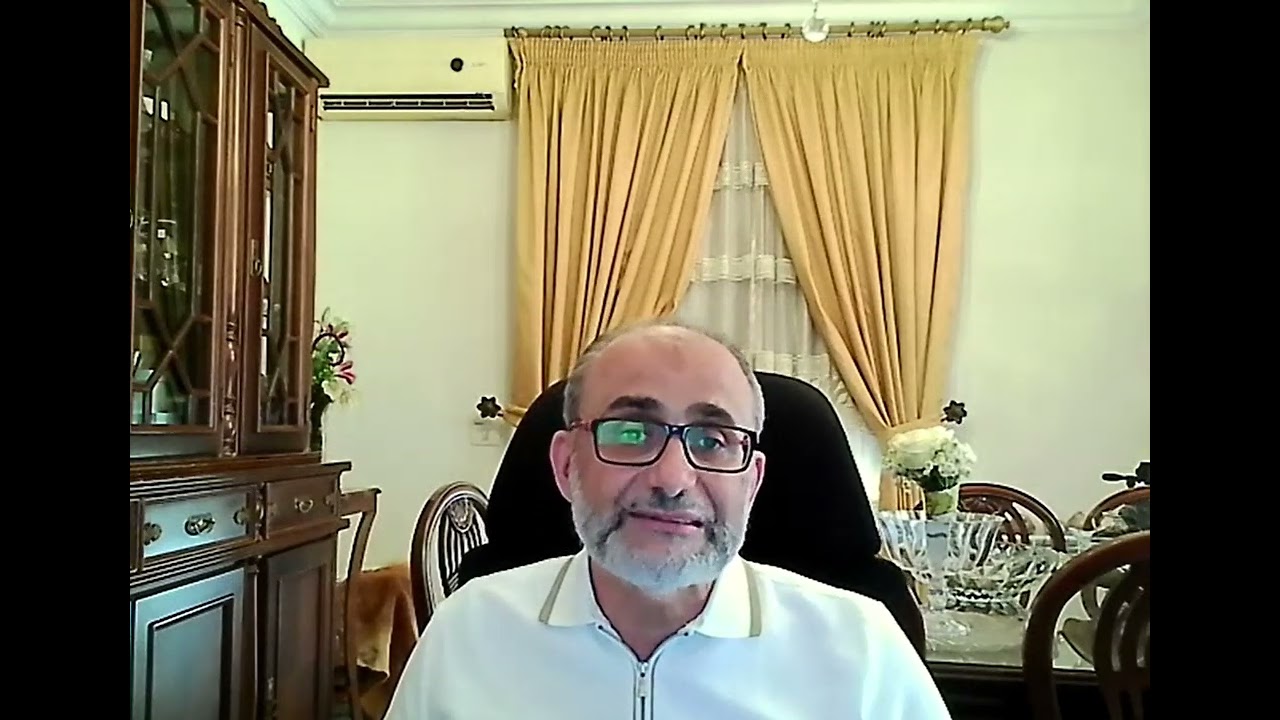

Ammar's video

Contact Ammar

1st lesson is backed
by our Good-fit Instructor Guarantee
by our Good-fit Instructor Guarantee
Similar classes
Good-fit Instructor Guarantee
Contact Ammar