facebook

Private teachers in Louvres

Find your perfect private tutor in Louvres.
Learn with our teachers at home or in their studio.

0 Teachers your wish list
|
zoom in iconzoom out icon

1858 private teachers in Louvres

Baptiste

£31

60-min

/h

trusted teacher iconTrusted teacher

Passionate pianist teaches piano, harmony and improvisation. Method inspired by the conservatory and my personal experience.

Passionate pianist teaches piano, harmony and improvisation. Method inspired by the conservatory and my personal experience.

Do you want to play Mozart, Debussy or Sofiane Pamart? Einaudi, Satie or Mendelsohn Bartholdy? Or improvise more freely? It's the same! To become a musician, it's good to know some fundamental basics that will allow you to become independent and approach the music that interests you with awareness. You have to work strategically, especially when you don't have hours a day to devote. The goal is for you to feel each week that you are better equipped than last week! And the body learns quickly if you feed it the right information. My teaching adapts to each person's desires, but I like to instill what I consider to be important foundations for the musician's autonomy, technically (posture, flexibility of the arm and wrist) and theoretically (reading and rhythm). I have a DEM in musical writing (writing in the style of so-called classical composers) from the CRR in Aubervilliers and I am currently studying towards a DEM in piano at the same conservatory. I also study jazz on my own and regularly improvise in a more free manner. Learning music can sometimes be laborious, which is why I like to insist on a clear work strategy by leaving the student with a clear and achievable mission each week. Let's continue to love music and understand it better!

Dounya

verified teacher icon
£28

60-min

/h

trusted teacher iconTrusted teacher

As an engineer in electronics and radiofrequency technologies, I support you in mastering complex concepts.

As an engineer in electronics and radiofrequency technologies, I support you in mastering complex concepts.

As an electronics engineer specializing in radio frequencies (RF), microwaves, and printed circuit board (PCB) design, I offer personalized courses to help you master advanced electronic technologies. My expertise covers a wide range of skills, including: - Design of RF and analog circuits. - Design of multilayer PCBs integrating complex functionalities (microstrip, stripline, etc.). - Simulation and optimization with tools like Altium Designer, KiCad, LTspice, CST Studio, and ADS (Advanced Design System). - Electromagnetic compatibility (EMC) and compliance testing. - Design of IoT (Internet of Things) systems and integration of wireless modules (Wi-Fi, Bluetooth, LoRa, ZigBee). - Signal analysis and digital processing (FFT, digital filtering). With a strong background in R&D, I combine theory and practical applications to teach complex concepts such as: - RF amplifiers and active/passive filters. - Switching power supplies (SMPS) and linear regulators. - Microcontrollers and embedded systems (STM32, Arduino, ESP32). - Electronic manufacturing: creation of Gerber files, production monitoring, assembly and testing. I have already successfully supported more than 50 students, helping them master key concepts such as computer-aided design (EDA), circuit debugging, and functional prototypes. Recognized for my teaching skills, my patience, and my ability to make electronics intuitive, I adapt to the needs of each student, whether it is to succeed in an academic project, launch a prototype, or perfect professional skills. Methodology My courses are suitable for all levels, with a progressive and personalized approach: 1) Theoretical bases: exploration of fundamental principles (Kirchhoff’s laws, Thévenin and Norton’s theorems, circuit analysis). 2) Concrete applications: simulation of electronic circuits, design of multilayer PCBs, optimization for RF performances, and manufacturing of prototypes. 3) Practical projects: realization of complete systems, from idea to design, integrating microcontrollers, RF modules, and laboratory tests. I rely on professional tools and offer additional resources: 1) Interactive simulations (CST Studio, LTspice). 2) Guides on electronic manufacturing (creating Gerber files, assembly). 3) Technical support for advanced tools: ADS, HFSS, MATLAB, Python. Contact Feel free to contact me to learn more or book a session. Together, we will explore advanced electronic technologies, and I will help you achieve your academic, professional, or personal goals.

Rika

5.0

2 reviews

(2)

£35

60-min

/h

trusted teacher iconTrusted teacher

Japanese Private Lesson with Native Teacher (in Paris or Online)

Japanese Private Lesson with Native Teacher (in Paris or Online)

Le français est écrit ci-dessous. I’m a Japanese teacher from Tokyo area and have over three years of tutoring Japanese learners from various nationalities. I teach you in English, but if you prefer I can teach you in French (B1) or Chinese (C1) too. In my Japanese class, you can practice speaking Japanese with a native Japanese teacher though talking about various topics with fun. Especially if you have goals to go to Japan in the future, or if you have goals like things below, my class would be very helpful for you. - Level up your Japanese Speaking skill at any level (N5-N1) - Increase your practical vocabulary and grammar usage based on Japanese conversation (For advanced learners, I can share words that may not appear in your formal courses too.) - Learn about Japan, Japanese customs and culture more though conversations Also, I offer some helps in other styles like these below. Let me know if there’s other thing I would be able to help you with. - Starter/Beginner Japanese (basic kanji, words, grammar, conversation etc.) - Travel phrases for your next trip to Japan - Group sessions for Japanese conversation Feel free to contact me to discuss together a course well suited to your needs. I’m looking forward to seeing you! ———————- Je suis un professeur de japonais venu de la région de Tokyo et j'ai plus de trois ans de tutorat d'apprenants japonais de différentes nationalités. Je vous enseigne dans mon français (B1) et mon anglais (C2). Dans mon cours de japonais, vous pouvez vous entraîner à parler japonais avec un professeur de japonais natif tout en parlant de divers sujets avec plaisir. Surtout si vous avez des objectifs d'aller au Japon à l'avenir, ou si vous avez des objectifs comme les choses ci-dessous, ma classe vous serait très utile. - Améliorez vos compétences en japonais à n'importe quel niveau (N5-N1) - Augmentez votre vocabulaire pratique et votre utilisation de la grammaire (Pour les apprenants avancés, je peux également partager des mots qui peuvent ne pas apparaître dans votre manuel.) - En savoir plus sur le Japon, les coutumes et la culture japonaises grâce aux conversations De plus, je propose des aides dans d'autres styles comme ceux-ci ci-dessous. Faites-moi savoir s'il y a d'autres choses pour lesquelles je pourrais vous aider. - Japonais débutant (kanji de base, mots, grammaire, conversation etc.) - Phrases de voyage pour votre prochain voyage au Japon - Séances de groupe pour conversation japonaise N'hésitez pas à me contacter pour discuter ensemble d'un cours bien adapté à vos besoins. J'ai hâte de vous voir!

Clara

verified teacher icon
5.0

1 reviews

(1)

£45

60-min

/h

trusted teacher iconTrusted teacher

Doctor of Geography from the Sorbonne - Supervision of theses, dissertations and internship reports

Doctor of Geography from the Sorbonne - Supervision of theses, dissertations and internship reports

Are you currently enrolled in an academic program at the bachelor's, master's, or doctoral level? Do you require personalized support and guidance to successfully complete your project? I am a lecturer and researcher in geography at the University of Paris 1 Panthéon-Sorbonne. I hold a doctorate in geography from the University of Paris 1 Panthéon-Sorbonne. My dissertation received a national award (Special Prize for Dissertations on the City from the PUCA). I have a master's degree in urban planning and development from Paris 1. I completed a preparatory course in literature and social sciences (B/L) at the Lycée Lakanal, and previously earned a scientific baccalaureate with a specialization in mathematics. I offer regular or occasional support in academic work: master's research papers, doctoral theses, internship reports... I share my expertise and experience in: - research methodology - preparation of a research field in social sciences - translation/interpretation management - analysis - scientific writing - work organization - calendar management - article writing - communication at conferences and seminars - publishing and communication strategy - applications for academic funding - setting up scientific projects - organization of scientific conferences, seminars and exhibitions - application to academic competitions - management of networking / scientific collaborations I can offer my services in French, English and Spanish.

play iconVideo

Couabo

verified teacher icon
£13

60-min

/h

Learn numbers in Spanish for beginners

Learn numbers in Spanish for beginners

I. The figures. A perfect knowledge of the numbers from 1 to 9 is essential because it allows you to It's easier to find tens and hundreds and to build numbers. complex later on. Moreover, these figures have the advantage of being close to the French in terms of phonetics! So here we go with the list of numbers from 1 to 9! 0: cero 1: one 2: back 3: very 4: cuatro 5: five 6: six 7: seven 8: ocho 9: nine Also, remember the basic rules of pronunciation: The letter u is pronounced "oo," the letter ch is pronounced "tch"... Thus, cuatro is pronounced "cou-a-tro." nueve « nou-é-bé », seis « sé-i-ss », ocho « o-tcho », and so on! II. The tens. A. The numbers from 10 to 29. The numbers between 10 and 29 do not follow exactly the same pattern of the dozens of constructions we will see later. No magic bullet then, you simply have to learn them! Luckily for me, Spanish is phonetically close to French! Here are two tables, one containing the numbers from 10 to 19 and the other the numbers from 20 to 29. The numbers from 10 to 19 in Spanish 10 ten 11 ounces 12 doce 13 trece 14 catorce 15 quince 16 dieciséis 17th century 18 dieciocho 19th century The numbers from 20 to 29 in Spanish 20 twenty 21 veintiuno 22 veintidos 23 twenty-somethings 24 veinticuatro 25 veinticinco 26 twenty-seized 27 veintisiete 28 veintiocho 29th century B. The tens from 30 to 90. The tens from 30 to 90 in Spanish 30 thirty 40 quarantine 50 fifty 60 sesenta 70 setenta 80 ochenta 90 noventa C. How are the numbers from 30 to 99 constructed? It's very simple: you associate the tens digit with the required number and you put y (which means and) between the two! Here's an example to clarify all of this! Let's say you wanted to introduce yourself by saying, "I'm 43 years old." The number 43 combines the ten forty, cuarenta in Spanish, and the number three, which is called Three. To say forty-three in Spanish, you would therefore add cuarenta+y+tres, which gives cuarenta y tres! Beware of the numbers 70 and 90! 75, 76, 77, 78, 79 and 95, 96, 97, 98, 99: in French, we pronounce seventy-five, seventy-six, seventy-seven, seventy-eight, seventy-nine, eighty- fifteen, ninety-six, ninety-seven, ninety-eight and ninety-nine, which could mislead you when you switch to Spanish. Indeed, you might be tempted to say, for 75 for example, setenta y quince since in French we say soixante-quinze: or setenta y quince does not exist in Spanish! The Spanish reason differently. For them, 75 is 70 + 5, so they say Seventy-five. And they do the same with 76, 77, 78, 79, 95, 96, 97, 98 and 99! You therefore obtain the following list: -76 = 70+6 or setenta y seis -77 = 70+7 i.e. setenta y siete -78 = 70+8 or setenta y ocho -79 = 70+9 i.e. setenta y nueve -95 = 90+5 i.e. noventa y cinco -96 = 90+6 i.e. noventa y seis -97 = 90+7 i.e. noventa y siete -98 = 90+8 i.e. noventa y ocho -99 = 90+9 i.e. noventa y nueve Now that you understand how tens are constructed, the following That won't be a problem! III. Hundreds, thousands, millions and billions. A. The hundreds. The construction of hundreds is the same as in French, that is to say, centenary then tens, then a single digit. Here is the table that summarizes the hundreds in Spanish. The hundreds in Spanish 100 cien or ciento* 200 doscientos 300 trescientos 400 cuatrocientos 500 quinientos 600 six hundred 700 setecientos 800,000 900 nineteen *This refers to the grammatical rule of apocope. Have you noticed? We generally find the following at the beginning of each hundred: Numbers from 1 to 9! Of course, there are exceptions 500, 700 and 900 to spice up the learning a little! And now, let's break down a few examples! -145 = 100+40+5 → we therefore obtain ciento cuarenta y cinco -276 = 200+70+6 → we therefore obtain doscientos setenta y seis -384 = 300+80+4 → we therefore obtain tresceintos ochenta y cuatro -455 = 400+50+5 → we therefore obtain cuatrocientos cincuenta y cinco -562 = 500+60+2 → we therefore obtain quinientos sesenta y dos -693 = 600+90+3 → we therefore obtain seiscientos noventa y tres -734 = 700+30+4 → we therefore obtain setecientos treinta y cuatro -816 = 800+10+6 → we therefore obtain ochocientos dieciséis (pay attention to the notation!!) -928 = 900+20+8 → we therefore obtain novecientos veintiocho (pay attention to the writing!!) *Cien is acceptable, but ciento is better. With the last two examples, you'll notice that I've exaggerated a bit in saying in the large I that the tens 10 and 20 were not constructed like the others. In reality, the y is indeed present and can be heard in dieciséis or veinticinco. Because Spaniards speak quickly, the rapid pronunciation of veinte y ocho made it "Sauté" the "e" in "veinte" to become "veint y ocho". The Spanish then simplified and contracted the writing into veintiocho. B. The thousands. The thousands 1000,000 2000 back millet 3000... very thousand 4000 four thousand 5000 five thousand 6000 six thousand 7000 seven thousand 8000 ocho mil 9000... nine thousand... And so it continues: ten thousand, one thousand, one thousand, two thousand, three thousand... To understand better and avoid mistakes, you really need to break it down. "Spanish-style" numbering, that is, separating thousands, hundreds, tens and numbers, as we do in French. Here are some simple examples: -1254 = 1000+200+50+4 → we therefore obtain mil doscientos cincuenta y cuatro -2564 = 2+1000+500+60+4 → we obtain one thousand quinientos sesenta y four -3987 = 3+1000+900+80+7 → we then obtain tres mil novecientos ochenta y siete -4321 = 4+1000+300+20+1 → we then obtain four thousand three hundred veins (Pay attention to your spelling!!)

Video thumbnail
Play icon
Couabo's video
play iconVideo

Sahil

verified teacher icon
£40

60-min

/h

Tabla lessons in Paris: beginner, intermediate, and advanced

Tabla lessons in Paris: beginner, intermediate, and advanced

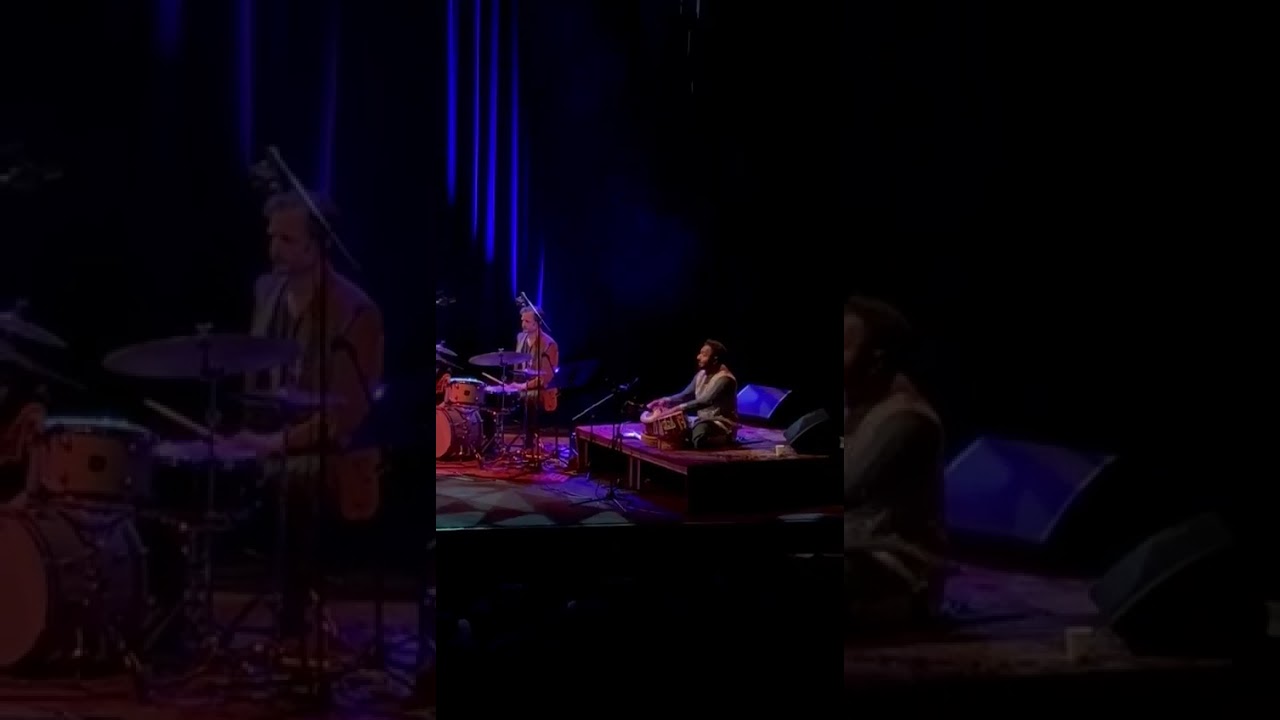
Discover the joy of rhythm! In my classes, you will learn the tabla as well as other percussion instruments – if you wish – in a friendly, dynamic, and motivating atmosphere. You will discover bols (rhythmic syllables), the different tāls (rhythmic cycles), hand coordination, playing precision, and the art of improvisation, all while developing your sense of rhythm and creativity. Whether you are a beginner or an experienced musician, each lesson is fully adapted to your level, your goals and your learning pace. My goal is to transmit much more than a technique: I also want to share the joy of playing, the energy of rhythm and the richness of the Indian musical tradition, in a caring atmosphere where learning always remains a pleasure. Courses available in French, English and Hindi, in Paris or online. Book your first lesson now! Discover the joy of rhythm! In my lessons, you'll learn tabla and, if you wish, explore other Indian percussion instruments in a friendly, dynamic, and inspiring environment. You'll develop proper hand technique, learn bols (rhythmic syllables), understand different tāls (rhythmic cycles), improve coordination and precision, and gradually discover the art of improvisation while building your musicality and sense of rhythm. Whether you're a complete beginner or an experienced musician, every lesson is tailored to your level, goals, and learning pace. My aim is to share much more than technique. I want to help you experience the joy of making music, the energy of rhythm, and the richness of the Indian classical tradition in a welcoming atmosphere where learning is always enjoyable. Lessons are available in English, French, and Hindi, in Paris or online. Book your first class anytime!

Video thumbnail
Play icon
Sahil's video
play iconVideo

Javier

verified teacher icon
£41

60-min

/h

trusted teacher iconTrusted teacher

ELECTRIC BASS LESSONS Original and Dynamic Method — All Levels

ELECTRIC BASS LESSONS Original and Dynamic Method — All Levels

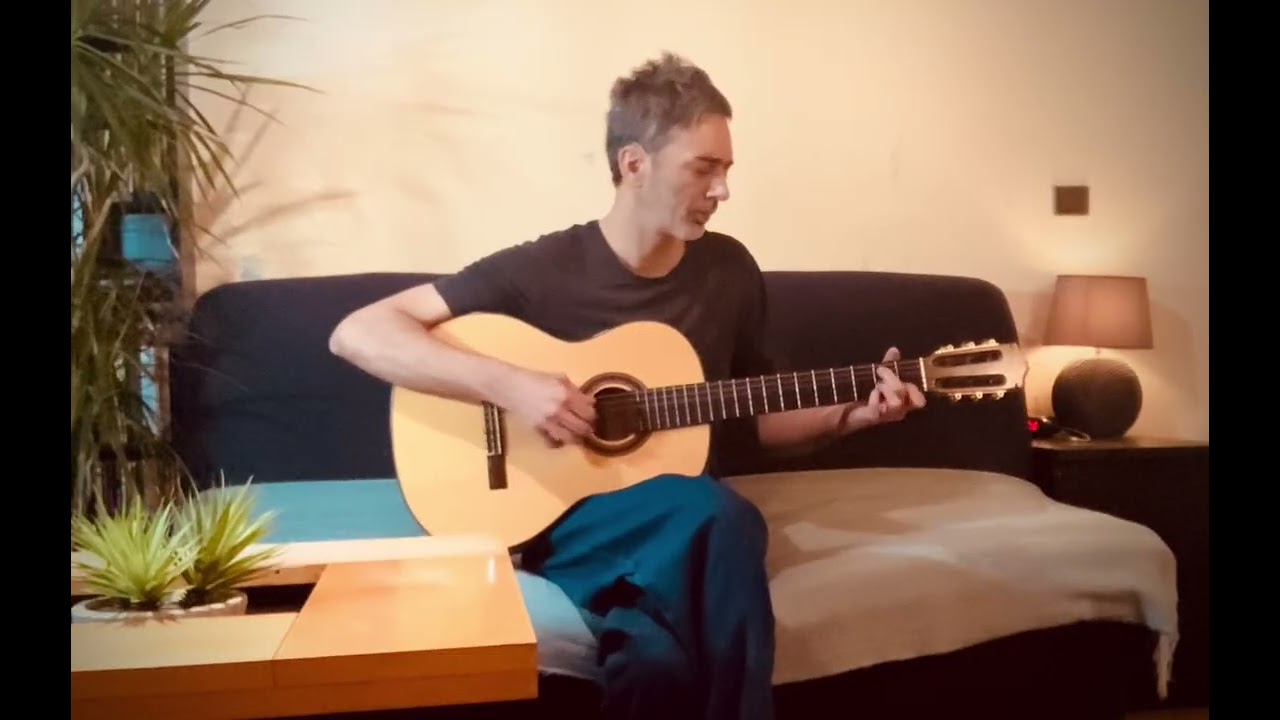
My lessons are personalized and dynamic. They combine instrumental technique with ear training, applied theory, and repertoire that most motivates the student. My goal is to train not only competent bass players, but well-rounded musicians who understand their role within a band and develop their own artistic voice. 🎯 MAIN OBJECTIVES • Mastering right-hand and left-hand techniques (fingerstyle, slap, tapping, etc.). • Develop an active musical ear and improvisation skills. • Understand the role of the bass in different musical styles and contexts. • Acquire tools to play with ease in ensembles and recording sessions. • Stimulate creativity and personal expression through the instrument. 📦 INCLUDED MATERIALS • 📖 PDFs with progressive technical exercises, from beginner to advanced level. • 🎧 Audio files (play-alongs) for practicing in a real context. • 🎼 Customizable repertoire: pieces chosen by the student, adapted to their level. • 📚 Modules of harmony and theory applied to bass. • 🎶 Improvisation material: scales, rhythmic patterns and stylistic language. 🔄 METHOD STRUCTURE 1. Initial assessment: diagnosis of musical level and interests. 2. Personalized plan: selection of the directory and definition of short/medium term objectives. 3. Dynamic lessons: combination of technique, repertoire, ear training and improvisation. 4. Continuous monitoring: progress recordings, personalized feedback and adjustments. 🎸 CONTENT BY LEVEL • Beginner: posture, chords, basic grooves, rhythmic reading, simple pieces. • Intermediate: slap technique, major and minor scales, walking bass, intermediate level repertoire. • Advanced: extensive techniques, modern harmony, free improvisation, complex repertoire. 👨‍🏫 PEDAGOGICAL APPROACH • A flexible method that adapts to the student's tastes and objectives. • Contextual practice: all exercises applied in real musical situations. • Emphasis on musicality, not just technique. • Use of technology to optimize learning (apps, audio, video).

Video thumbnail
Play icon
Javier's video
PreviousShowing results 176 - 200 of 1858176 - 200 of 1858Next

Our students from Louvres evaluate their teacher.

To ensure the quality of our teachers, we ask our students from Louvres to review them.

Only reviews of students are published and they are guaranteed by Apprentus. Rated 4.9 out of 5 based on 15 reviews.

“ Classes with Rika are great, I've been learning with her for several months now and I'm 100% satisfied. We've had both physical and online classes, I was worried online would be difficult to learn from as it's been my experience in the past but I was very pleasantly surprised and since then we stick to online! After every class, Rika sends me slides of the new grammar we learnt including some sentences for me to translates as homework using the new and previous vocabulary/grammar. During physical classes, I wouldn't receive these recaps (which is a shame) but Rika would make me write down some of our dialogues so I would also practice writing. The way classes work is purely oral practice. Rika will ask me questions in order to create dialogue that I have to express in Japanese and the learning builds up from it. She is soooo patient when I take ages to express my sentence because I'm searching for my words or structure. Very kind and friendly too, you won't feel pressured nor judged to be proficient. Communication outside of class is clear and fast, she is very attentive and flexible. I'm a French speaker but we hold the class in English/Japanese as it's best for us both so I can't attest how it goes in French or Chinese/Japanese but I'm sure it works well too! Highly recommend! ”

“ I have invited Shree to an art lesson with multiple fellow drawing beginners. She paid a lot of attention to every one and could help us improving our skills. ”

“ My son had a great lesson. Thanks. It was interesting, engaging and fun. ”

To ensure the quality of our teachers, we ask our students from Louvres to review them.

Only reviews of students are published and they are guaranteed by Apprentus. Rated 4.9 out of 5 based on 15 reviews.

Map
Map