facebook
favorite button
super instructor icon
Trusted teacher
This teacher has a fast response time and rate, demonstrating a high quality of service to their students.
member since icon
Since September 2023
Instructor since September 2023
Computer Science Basics including Computer Graphics, Computer Applications
course price icon
From 17 £ /h
arrow icon
Computer Science basics are an important subject for Today's IT era. Information Technology is on its peak, if you want to learn about the basics i.e. Microsoft expert, graphics, Computer Applications and so on please join my class. thank You
Extra information
Web cam is not important
Location
location type icon
Online from Pakistan
About Me
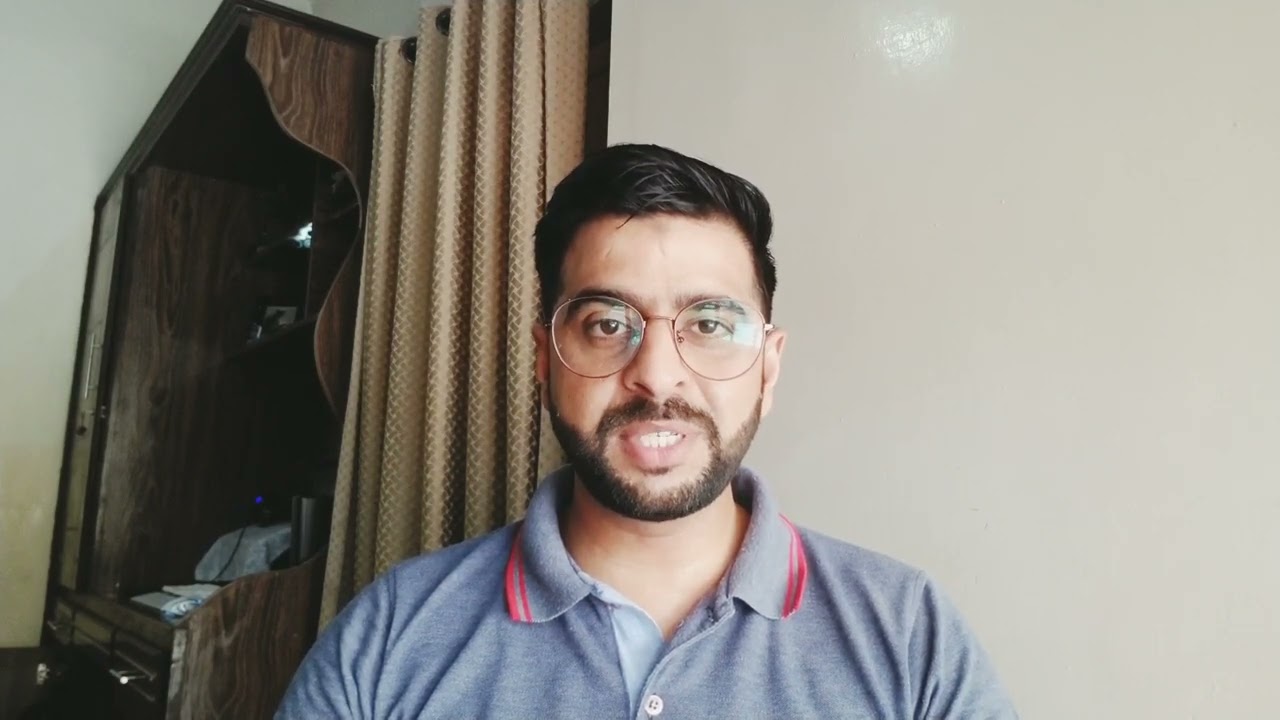
Hello, my name is Sohail and I have a Master's degree in Computer Science. I have been teaching for around 09 years and can assist with all subjects related to computer and information technology. My specialization includes web designing, web development, software engineering, software testing, computer systems, computer applications, and programming. If you are looking to improve your skills and achieve your learning goals, I would highly recommend booking a lesson with me. I am happy to assist you and guide you through the learning process. Let's work together to help you reach your full potential. Thank you.
Education
Master's in Computer Science From University of Engineering & Technology, My specialization includes web designing, web development, software engineering, software testing, computer systems, computer applications, and programming. If you are looking to improve your skills and achieve your learning goals,
Experience / Qualifications
I have 8 years of teaching experience. i am Microsoft certified. As an aspiring computer science teacher, I feel confident in my ability to impart knowledge to high school students. My aim is to help each student develop their skills in a subject that is increasingly important in our digital world. I believe that interactive learning, discussions, and problem-solving exercises are the most effective methods of teaching. By utilizing various teaching techniques, I can create an environment that is both stimulating and supportive, where students can learn at their own pace and succeed.
Age
Children (7-12 years old)
Teenagers (13-17 years old)
Adults (18-64 years old)
Seniors (65+ years old)
Student level
Beginner
Intermediate
Advanced
Duration
60 minutes
The class is taught in
English
Urdu
Persian
Availability of a typical week
(GMT -04:00)
New York
at teacher icon
Online via webcam
Mon
Tue
Wed
Thu
Fri
Sat
Sun
00-04
04-08
08-12
12-16
16-20
20-24
Hello, my name is Sohail and I have a Master's degree in Computer Science. I have been teaching for around 09 years and can assist with all subjects related to computer and information technology. My specialization includes web designing, web development, software engineering, software testing, computer systems, computer applications, and programming. If you are looking to improve your skills and achieve your learning goals, I would highly recommend booking a lesson with me. I am happy to assist you and guide you through the learning process. Let's work together to help you reach your full potential. Thank you.
I have 8 years of teaching experience. i am Microsoft certified. As an aspiring computer science teacher, I feel confident in my ability to impart knowledge to high school students. My aim is to help each student develop their skills in a subject that is increasingly important in our digital world. I believe that interactive learning, discussions, and problem-solving exercises are the most effective methods of teaching. By utilizing various teaching techniques, I can create an environment that is both stimulating and supportive, where students can learn at their own pace and succeed.
I'm passionate about teaching computer science and always encourage my students to ask questions and explore new topics. A positive learning environment is essential for students to thrive, and I strive to create such an environment in my classes. So if you're interested in learning more about computer science, don't hesitate, Let's begin our learning journey together!
Read more
Similar classes
arrow icon previousarrow icon next
verified badge
Reza
🐍 Learn Python from Scratch — Think, Solve & Code!

Have you always wanted to learn Python programming but didn't know where to start?

Or maybe you've already started learning Python but some concepts still feel confusing?

Don't worry — you're in the right place! 😊

I'm Reza, a Computer Engineer, teacher, and technology enthusiast. I have a Master's degree in Computer Systems Architecture, I am currently studying Artificial Intelligence, and I have experience teaching programming and computer science to students with different backgrounds and skill levels.

🧠 Before Python: Learn How to Think Like a Programmer

For me, learning Python isn't just about learning commands and syntax. The most important part of programming is learning how to think when you face a problem.

Before jumping into code, we'll learn how to understand a problem, break it into smaller pieces, identify what information we have and what we need to find, and develop a step-by-step solution. Then we'll turn that solution into Python code.

We'll practice logical thinking, reasoning, problem-solving, algorithmic thinking, and debugging along the way. My goal is to help you become someone who can look at a new problem and think, "Okay, how can I solve this?" — not someone who only remembers Python syntax.

💻 What will you learn?

In my Python classes, we can start from the very beginning and gradually build your programming skills. We'll combine programming fundamentals with problem-solving and practical coding, so you understand not only how to write Python, but also how to approach a programming problem.

Depending on your level and goals, we can cover topics such as:

Python fundamentals and programming concepts
Variables and data types
Numbers, strings, and text processing
if statements and decision making
for and while loops
Lists, tuples, dictionaries, and sets
Functions and reusable code
Working with files
Error handling and debugging
Problem-solving, reasoning, and programming logic
Algorithmic thinking and step-by-step solution design
Object-oriented programming
Practical Python exercises and projects
Introduction to Python for Artificial Intelligence and Machine Learning
🎯 My teaching style

I don't want you to simply memorize Python commands.

I want you to understand how programmers think.

During our lessons, I explain concepts in simple language and then we practice them together. You'll learn how to analyze a problem, think about possible solutions, write code, test it, find mistakes, and improve your solution. You'll make mistakes, ask questions, and gradually become more confident.

I believe that learning by doing is one of the best ways to learn programming.

So instead of spending the whole lesson listening to me, you'll actually write Python code and practice what you've learned.

And don't worry if you're a complete beginner. You don't need any previous programming experience to start.

👨‍💻 Who are these Python lessons for?

My classes are suitable for:

Complete beginners who have never programmed before
Students who want to learn Python from the basics
University and school students
People who want to improve their programming skills
Anyone who wants to learn Python for personal or professional development
Students interested in eventually moving toward Artificial Intelligence, Machine Learning, or Data Science

I'll adapt the lessons to your level, your goals, and your learning speed.

🚀 Let's learn Python together!

Learning to program can seem difficult at first, but it doesn't have to be.

With the right explanation, enough practice, and a little patience, you can go from writing your first print() statement to building your own Python programs.

My goal is simple:

Think Clearly. Solve Problems. Learn Python. Build Something.

If you're ready to start learning Python, book your first lesson and let's write some code together! 🐍💻
verified badge
Vincent
With over seven years of experience in teaching Computer Science & Information Technology (ICT), I have developed a strong expertise in delivering high-quality education across multiple internationally recognized curricula, including Cambridge IGCSE, GCSE, A-Levels, O-Levels, and Checkpoint. My passion lies in equipping students with coding, cybersecurity, and digital literacy skills, ensuring they are well-prepared for the evolving demands of the digital world.

Expertise & Teaching Areas:
✅ Programming & Software Development: Python, Java, C++
✅ Cybersecurity: Ethical hacking, data protection, network security
✅ Digital Literacy: ICT applications, online safety, cloud computing
✅ Data Science & AI: Data analysis, machine learning fundamentals
✅ Web Development: HTML, CSS, JavaScript

Curriculum & Pedagogical Experience:
🔹 Cambridge IGCSE & GCSE ICT & Computer Science – Teaching core and extended syllabi, focusing on programming logic, databases, and networking.
🔹 Cambridge A-Levels & O-Levels Computer Science – Preparing students for advanced computing concepts, problem-solving, and algorithm development.
🔹 Cambridge Checkpoint ICT – Building foundational skills in digital technology and computer applications.

Professional Impact:
📌 Mentored students to achieve top grades in Cambridge ICT & Computer Science exams.
📌 Developed interactive lesson plans integrating real-world applications of technology.
📌 Conducted coding boot camps and cybersecurity workshops to enhance practical learning.
📌 Guided students in project-based learning, including app development and website design.

With a strong commitment to student-centered learning and technological innovation, I am dedicated to shaping future tech leaders and empowering learners with skills relevant to careers in technology, data science, and software development.
verified badge
Ammar
A- TOPICS YOU CAN EXPLORE AND MASTER:
1- PYTHON FOUNDATIONS
• Variables, data types, operators, conditional structures, loops, functions, modules, files, exceptions, and object-oriented programming
• Lists, tuples, dictionaries, sets, comprehensions, debugging, and writing clear, reusable, well-structured code
• Jupyter Notebook, Anaconda, Visual Studio Code, virtual environments, and package management

2 — PROGRAMMING, ALGORITHMS, AND COMPUTER SCIENCE FOUNDATIONS
• Algorithmic thinking, problem decomposition, pseudocode, flowcharts, procedural programming, object-oriented programming, recursion, and modular program design
• Fundamental data structures including arrays, lists, stacks, queues, dictionaries/hash tables, sets, trees, graphs, and their appropriate use
• Searching, sorting, traversal, algorithm efficiency, computational complexity, Big-O notation, debugging, testing, code organization, and problem-solving strategies
• Practical programming exercises ranging from beginner problems to university-level algorithmic and computational challenges

3- DATA PREPARATION AND EXPLORATION
• NumPy and pandas for importing, cleaning, transforming, filtering, grouping, reshaping, and merging data
• Missing values, duplicates, outliers, inconsistent formats, data leakage, and data-quality validation
• Exploratory data analysis using descriptive statistics, Matplotlib, Seaborn, and graphical interpretation

4- MATHEMATICAL FOUNDATIONS
• Linear algebra, vectors, matrices, derivatives, optimization, probability, and statistics
• Loss functions, gradients, distance measures, regularization, likelihood, and model complexity
• Mathematical concepts are explained according to the learner’s level and the requirements of the selected algorithms

5- SUPERVISED MACHINE LEARNING
• Linear and polynomial regression, logistic regression, and regularized models
• k-nearest neighbours, decision trees, random forests, gradient boosting, support vector machines, and Naive Bayes classifiers
• Classification, regression, model assumptions, decision boundaries, feature importance, and interpretation of results

6- UNSUPERVISED LEARNING
• Clustering using k-means, hierarchical clustering, and density-based methods
• Principal component analysis, dimensionality reduction, anomaly detection, and pattern or structure discovery
• Method selection, evaluation of data structure, and interpretation of results without predefined labels

7- MODEL EVALUATION AND IMPROVEMENT
• Training, validation, and test sets; cross-validation; hyperparameter optimization
• Accuracy, precision, recall, specificity, F1 score, ROC–AUC, confusion matrices, MAE, MSE, RMSE, and R2
• Underfitting, overfitting, bias–variance trade-off, class imbalance, feature engineering, feature selection, scaling, and regularization

8- DEEP LEARNING
• Neural-network foundations, activation functions, forward propagation, backpropagation, and gradient descent
• Multilayer perceptrons, convolutional neural networks, recurrent neural networks, and Transformer foundations
• TensorFlow, Keras, or PyTorch depending on the learner’s project and working environment

9- ARTIFICIAL INTELLIGENCE APPLICATIONS
• Natural language processing, text classification, embeddings, sentiment analysis, and foundations of language models
• Computer vision, image classification, fundamental principles of object detection, and image preprocessing
• Recommendation systems, forecasting, anomaly detection, intelligent automation, and decision-support applications

10- GENERATIVE AI AND LARGE LANGUAGE MODELS
• Transformer architecture, tokens, embeddings, attention mechanisms, prompt engineering, Retrieval-Augmented Generation (RAG), and model evaluation
• Use of artificial-intelligence APIs, vector databases, document-retrieval systems, and structured AI-enabled workflows when relevant
• Reliability, hallucinations, bias, privacy, responsible use, and appropriate human validation

11- TOOLS AND LIBRARIES
• Python, NumPy, pandas, Matplotlib, Seaborn, scikit-learn, SciPy, Statsmodels, TensorFlow, Keras, and PyTorch
• Jupyter Notebook, Anaconda, Visual Studio Code, Git, GitHub, SQL, Excel, and Power BI when useful to the project
• Additional libraries may be introduced depending on the selected specialization and dataset

12- PROJECTS, RESEARCH, AND INTERVIEW PREPARATION
• Complete projects covering data preparation, model development, evaluation, interpretation, and presentation of results
• University assignments, dissertations, theses, research projects, portfolio projects, technical interviews, and professional applications
• Code review, debugging, documentation, reproducibility, model comparison, and communication of results

-------------------------------------------------------------------------------------------------------------------------------------------------------------------------------
B- PERSONALIZED TUTORING: LEARNING HOW TO REASON
Machine learning and artificial intelligence become much more accessible when mathematics, algorithms, Python code, data, and real-world applications are clearly connected.

My lessons help you move beyond simply copying code or using models as “black boxes.” You will learn how to define the problem correctly, prepare the data, select an appropriate algorithm, understand how it works, train and evaluate the model, diagnose errors, improve performance, and interpret results rigorously and responsibly.

Each lesson is personalized according to your current level, mathematical background, programming experience, dataset, university work, research project, interview preparation, or professional objective. We begin by identifying your existing knowledge, software environment, expected outcomes, and main conceptual or technical difficulties. We then establish a structured learning plan.

The first lesson combines a discussion of your background, objectives, and tutoring needs; an initial assessment of your current knowledge; personalized planning and organization of future sessions; and a short trial lesson to determine the most effective learning approach.

A typical session may include conceptual explanation, development of mathematical intuition, live coding, guided implementation, model evaluation, technical problem solving, and a concise summary of the next steps.

You may work with your own dataset, university assignment, research project, or professional problem, provided that confidential information is handled appropriately. I can also provide structured examples and datasets suited to your level.

My goal is not simply to help you run an algorithm. It is to help you understand why it is appropriate, how it learns from data, how to evaluate it correctly, why it may fail, and how to build a reliable, interpretable, and scientifically rigorous solution.
Video thumbnail
Play icon
Sohail's video
message icon
Contact Sohail
repeat students icon
1st lesson is backed
by our
Good-fit Instructor Guarantee
Similar classes
arrow icon previousarrow icon next
verified badge
Reza
🐍 Learn Python from Scratch — Think, Solve & Code!

Have you always wanted to learn Python programming but didn't know where to start?

Or maybe you've already started learning Python but some concepts still feel confusing?

Don't worry — you're in the right place! 😊

I'm Reza, a Computer Engineer, teacher, and technology enthusiast. I have a Master's degree in Computer Systems Architecture, I am currently studying Artificial Intelligence, and I have experience teaching programming and computer science to students with different backgrounds and skill levels.

🧠 Before Python: Learn How to Think Like a Programmer

For me, learning Python isn't just about learning commands and syntax. The most important part of programming is learning how to think when you face a problem.

Before jumping into code, we'll learn how to understand a problem, break it into smaller pieces, identify what information we have and what we need to find, and develop a step-by-step solution. Then we'll turn that solution into Python code.

We'll practice logical thinking, reasoning, problem-solving, algorithmic thinking, and debugging along the way. My goal is to help you become someone who can look at a new problem and think, "Okay, how can I solve this?" — not someone who only remembers Python syntax.

💻 What will you learn?

In my Python classes, we can start from the very beginning and gradually build your programming skills. We'll combine programming fundamentals with problem-solving and practical coding, so you understand not only how to write Python, but also how to approach a programming problem.

Depending on your level and goals, we can cover topics such as:

Python fundamentals and programming concepts
Variables and data types
Numbers, strings, and text processing
if statements and decision making
for and while loops
Lists, tuples, dictionaries, and sets
Functions and reusable code
Working with files
Error handling and debugging
Problem-solving, reasoning, and programming logic
Algorithmic thinking and step-by-step solution design
Object-oriented programming
Practical Python exercises and projects
Introduction to Python for Artificial Intelligence and Machine Learning
🎯 My teaching style

I don't want you to simply memorize Python commands.

I want you to understand how programmers think.

During our lessons, I explain concepts in simple language and then we practice them together. You'll learn how to analyze a problem, think about possible solutions, write code, test it, find mistakes, and improve your solution. You'll make mistakes, ask questions, and gradually become more confident.

I believe that learning by doing is one of the best ways to learn programming.

So instead of spending the whole lesson listening to me, you'll actually write Python code and practice what you've learned.

And don't worry if you're a complete beginner. You don't need any previous programming experience to start.

👨‍💻 Who are these Python lessons for?

My classes are suitable for:

Complete beginners who have never programmed before
Students who want to learn Python from the basics
University and school students
People who want to improve their programming skills
Anyone who wants to learn Python for personal or professional development
Students interested in eventually moving toward Artificial Intelligence, Machine Learning, or Data Science

I'll adapt the lessons to your level, your goals, and your learning speed.

🚀 Let's learn Python together!

Learning to program can seem difficult at first, but it doesn't have to be.

With the right explanation, enough practice, and a little patience, you can go from writing your first print() statement to building your own Python programs.

My goal is simple:

Think Clearly. Solve Problems. Learn Python. Build Something.

If you're ready to start learning Python, book your first lesson and let's write some code together! 🐍💻
verified badge
Vincent
With over seven years of experience in teaching Computer Science & Information Technology (ICT), I have developed a strong expertise in delivering high-quality education across multiple internationally recognized curricula, including Cambridge IGCSE, GCSE, A-Levels, O-Levels, and Checkpoint. My passion lies in equipping students with coding, cybersecurity, and digital literacy skills, ensuring they are well-prepared for the evolving demands of the digital world.

Expertise & Teaching Areas:
✅ Programming & Software Development: Python, Java, C++
✅ Cybersecurity: Ethical hacking, data protection, network security
✅ Digital Literacy: ICT applications, online safety, cloud computing
✅ Data Science & AI: Data analysis, machine learning fundamentals
✅ Web Development: HTML, CSS, JavaScript

Curriculum & Pedagogical Experience:
🔹 Cambridge IGCSE & GCSE ICT & Computer Science – Teaching core and extended syllabi, focusing on programming logic, databases, and networking.
🔹 Cambridge A-Levels & O-Levels Computer Science – Preparing students for advanced computing concepts, problem-solving, and algorithm development.
🔹 Cambridge Checkpoint ICT – Building foundational skills in digital technology and computer applications.

Professional Impact:
📌 Mentored students to achieve top grades in Cambridge ICT & Computer Science exams.
📌 Developed interactive lesson plans integrating real-world applications of technology.
📌 Conducted coding boot camps and cybersecurity workshops to enhance practical learning.
📌 Guided students in project-based learning, including app development and website design.

With a strong commitment to student-centered learning and technological innovation, I am dedicated to shaping future tech leaders and empowering learners with skills relevant to careers in technology, data science, and software development.
verified badge
Ammar
A- TOPICS YOU CAN EXPLORE AND MASTER:
1- PYTHON FOUNDATIONS
• Variables, data types, operators, conditional structures, loops, functions, modules, files, exceptions, and object-oriented programming
• Lists, tuples, dictionaries, sets, comprehensions, debugging, and writing clear, reusable, well-structured code
• Jupyter Notebook, Anaconda, Visual Studio Code, virtual environments, and package management

2 — PROGRAMMING, ALGORITHMS, AND COMPUTER SCIENCE FOUNDATIONS
• Algorithmic thinking, problem decomposition, pseudocode, flowcharts, procedural programming, object-oriented programming, recursion, and modular program design
• Fundamental data structures including arrays, lists, stacks, queues, dictionaries/hash tables, sets, trees, graphs, and their appropriate use
• Searching, sorting, traversal, algorithm efficiency, computational complexity, Big-O notation, debugging, testing, code organization, and problem-solving strategies
• Practical programming exercises ranging from beginner problems to university-level algorithmic and computational challenges

3- DATA PREPARATION AND EXPLORATION
• NumPy and pandas for importing, cleaning, transforming, filtering, grouping, reshaping, and merging data
• Missing values, duplicates, outliers, inconsistent formats, data leakage, and data-quality validation
• Exploratory data analysis using descriptive statistics, Matplotlib, Seaborn, and graphical interpretation

4- MATHEMATICAL FOUNDATIONS
• Linear algebra, vectors, matrices, derivatives, optimization, probability, and statistics
• Loss functions, gradients, distance measures, regularization, likelihood, and model complexity
• Mathematical concepts are explained according to the learner’s level and the requirements of the selected algorithms

5- SUPERVISED MACHINE LEARNING
• Linear and polynomial regression, logistic regression, and regularized models
• k-nearest neighbours, decision trees, random forests, gradient boosting, support vector machines, and Naive Bayes classifiers
• Classification, regression, model assumptions, decision boundaries, feature importance, and interpretation of results

6- UNSUPERVISED LEARNING
• Clustering using k-means, hierarchical clustering, and density-based methods
• Principal component analysis, dimensionality reduction, anomaly detection, and pattern or structure discovery
• Method selection, evaluation of data structure, and interpretation of results without predefined labels

7- MODEL EVALUATION AND IMPROVEMENT
• Training, validation, and test sets; cross-validation; hyperparameter optimization
• Accuracy, precision, recall, specificity, F1 score, ROC–AUC, confusion matrices, MAE, MSE, RMSE, and R2
• Underfitting, overfitting, bias–variance trade-off, class imbalance, feature engineering, feature selection, scaling, and regularization

8- DEEP LEARNING
• Neural-network foundations, activation functions, forward propagation, backpropagation, and gradient descent
• Multilayer perceptrons, convolutional neural networks, recurrent neural networks, and Transformer foundations
• TensorFlow, Keras, or PyTorch depending on the learner’s project and working environment

9- ARTIFICIAL INTELLIGENCE APPLICATIONS
• Natural language processing, text classification, embeddings, sentiment analysis, and foundations of language models
• Computer vision, image classification, fundamental principles of object detection, and image preprocessing
• Recommendation systems, forecasting, anomaly detection, intelligent automation, and decision-support applications

10- GENERATIVE AI AND LARGE LANGUAGE MODELS
• Transformer architecture, tokens, embeddings, attention mechanisms, prompt engineering, Retrieval-Augmented Generation (RAG), and model evaluation
• Use of artificial-intelligence APIs, vector databases, document-retrieval systems, and structured AI-enabled workflows when relevant
• Reliability, hallucinations, bias, privacy, responsible use, and appropriate human validation

11- TOOLS AND LIBRARIES
• Python, NumPy, pandas, Matplotlib, Seaborn, scikit-learn, SciPy, Statsmodels, TensorFlow, Keras, and PyTorch
• Jupyter Notebook, Anaconda, Visual Studio Code, Git, GitHub, SQL, Excel, and Power BI when useful to the project
• Additional libraries may be introduced depending on the selected specialization and dataset

12- PROJECTS, RESEARCH, AND INTERVIEW PREPARATION
• Complete projects covering data preparation, model development, evaluation, interpretation, and presentation of results
• University assignments, dissertations, theses, research projects, portfolio projects, technical interviews, and professional applications
• Code review, debugging, documentation, reproducibility, model comparison, and communication of results

-------------------------------------------------------------------------------------------------------------------------------------------------------------------------------
B- PERSONALIZED TUTORING: LEARNING HOW TO REASON
Machine learning and artificial intelligence become much more accessible when mathematics, algorithms, Python code, data, and real-world applications are clearly connected.

My lessons help you move beyond simply copying code or using models as “black boxes.” You will learn how to define the problem correctly, prepare the data, select an appropriate algorithm, understand how it works, train and evaluate the model, diagnose errors, improve performance, and interpret results rigorously and responsibly.

Each lesson is personalized according to your current level, mathematical background, programming experience, dataset, university work, research project, interview preparation, or professional objective. We begin by identifying your existing knowledge, software environment, expected outcomes, and main conceptual or technical difficulties. We then establish a structured learning plan.

The first lesson combines a discussion of your background, objectives, and tutoring needs; an initial assessment of your current knowledge; personalized planning and organization of future sessions; and a short trial lesson to determine the most effective learning approach.

A typical session may include conceptual explanation, development of mathematical intuition, live coding, guided implementation, model evaluation, technical problem solving, and a concise summary of the next steps.

You may work with your own dataset, university assignment, research project, or professional problem, provided that confidential information is handled appropriately. I can also provide structured examples and datasets suited to your level.

My goal is not simply to help you run an algorithm. It is to help you understand why it is appropriate, how it learns from data, how to evaluate it correctly, why it may fail, and how to build a reliable, interpretable, and scientifically rigorous solution.
Good-fit Instructor Guarantee
favorite button
message icon
Contact Sohail