facebook
favorite button
1/5
super instructor icon
Trusted teacher
This teacher has a fast response time and rate, demonstrating a high quality of service to their students.
member since icon
Since July 2021
Instructor since July 2021
Translated by GoogleSee original
Discrete Mathematical Structures
course price icon
From 12 £ /h
arrow icon
Discrete mathematical structures
It is one of the courses for the first year of the faculties of computer science, artificial intelligence and faculties of engineering. The explanation includes the lessons Logic statements-truth tables-gates-dets-op- logical circuits-reducing circuit-logical gates-relations-functions
Location
location type icon
Online from Egypt
About Me
I explain in an easy and simplified manner, loving my specialization, and I enjoy teaching for students, and I do not make my lessons one-sided only, but I make students participate in thinking about issues and solutions, or even trying to reach a solution. In my teaching, I take into account the different levels of students, continuous follow-up through periodic tests and assignments, and the use of educational methods that are attractive to students, and an easy method far from complexity to entice students in what I teach.
Education
He holds a PhD in Mathematical Statistics - Cairo University - a master's degree in the same specialization and a BA in mathematics and statistics, Cairo University.
PH.D in Mathematical Statistics -Many courses from British Cancel in English Language up to advanced level
Experience / Qualifications
More than 19 years experiences in teaching Math.
I have taught mathematics for more than 19 years in many international and national schools in the American and British departments, as well as language schools. I have also taught online and through famous educational platforms in various countries and so far, such as Fahim, Al-Ustad, Anar, my courses, my school and Nafham.
Age
Adults (18-64 years old)
Student level
Beginner
Intermediate
Advanced
Duration
60 minutes
The class is taught in
Arabic
English
Availability of a typical week
(GMT -05:00)
New York
at teacher icon
Online via webcam
Mon
Tue
Wed
Thu
Fri
Sat
Sun
00-04
04-08
08-12
12-16
16-20
20-24
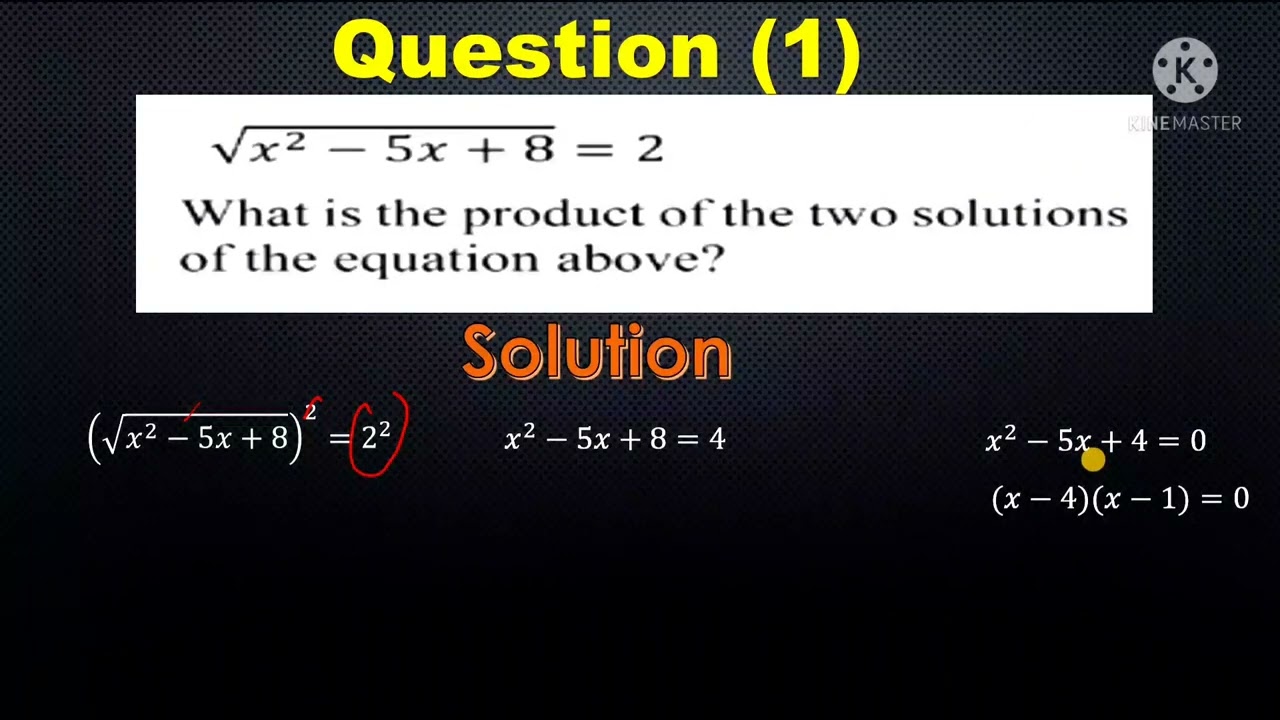
Preparing the student to pass the quantitative aptitude test to qualify for admission to applied and practical colleges in the Kingdom of Saudi Arabia.
This applies to the test provided by the Ministry of Education in the Kingdom, whether the test is paper-based or computer-based
Read more
I explain the topics with solving problems from the previous exams in an easy way and make the student participate in the solution during the class and give a quiz after each class to the student with the homework as well. There is continuous follow-up to improve the student’s level after each class, weekly and monthly. I take into account all the levels of weak, medium, good, very good and excellent. If the class is group, I divide the students according to the level so as to assign each group an appropriate method and means of explanation.
Read more
Show more
arrow icon
Similar classes
arrow icon previousarrow icon next
verified badge
If you’ve ever felt that science and math are difficult, it’s probably because no one showed you how to think like a problem solver.
In my classes, you’ll learn not just formulas or code but how to truly understand concepts, apply them, and build strong logical intuition.

I teach:
• 🔢 Mathematics: From algebra and calculus to applied problem-solving for real-world use.
• 💻 Computer Science: Coding fundamentals (Python, C++), algorithms, and logical thinking for beginners and intermediate learners.
• ⚛️ Physics: Mechanics, thermodynamics, and practical examples that make abstract ideas simple and visual.

As a Software Engineer and Master’s student in Engineering at Nagoya University, I bring both academic knowledge and hands-on experience from real projects. My teaching approach is interactive, visual, and deeply focused on understanding over memorization.

Let’s turn complex problems into clear, step-by-step insights — and make learning something you genuinely enjoy.
verified badge
Python is the most in-demand programming language in the world right now — and one of the easiest to learn with the right guidance.
Whether you've never written a line of code or you're a student who needs to pass a programming course, this is a practical, no-fluff introduction that gets you writing real code from session one.
What we can cover depending on your goals:

Python fundamentals: variables, loops, functions, data structures
- Object-oriented programming (OOP)
- Data manipulation with pandas and NumPy
- Introduction to machine learning with scikit-learn
- Database management with SQL
- C and Java upon request
- MATLAB and R available for engineering/science students

Why learn with me?
I'm not a student teaching on the side — I'm a professional engineer who uses Python daily for data analysis, modeling, and automation. I know exactly which concepts matter in the real world and which ones you can skip for now.
Sessions are 100% personalized: I adapt the pace, the examples, and the exercises to your background and your goal — whether that's passing your university exam, building a project, or landing a job.
verified badge
As an experienced math teacher, I offer private math lessons via webcam, math tutoring to catch up on gaps, as well as intensive math lessons before exams. I specialize in helping middle school/high school students with math homework and I offer distance math lessons tailored to the student's needs. My goal is to help you improve your math skills quickly and effectively prepare for the baccalaureate/brevet. I also listen to students experiencing academic difficulties and can offer you personalized support to overcome your difficulties.

Middle school or high school students from the French mission. The 2nd and 1st general Terminale specialty classes of the French system
The 5th, 4th and 3rd levels of the college
levels T and Common Core Sciences, Technological TC, 1st Baccalaureate Experimental Sciences and final year of all streams (SVT-PC-SC.Math)
My goal is to help students to:

Improve their level
Deepen their knowledge
Assimilate their courses
fill in their gaps
improve
I am also able to support them in preparing for their exams and competitive entrance exams to the grandes écoles, as well as provide them with homework help. I am convinced that I have the qualities required to enable my students to progress and perhaps even give them a taste for this subject!
I am considered one of the best online math tutors. I also offer math support for French mission students and math help for international students wishing to follow the French curriculum.
online math lessons, math tutoring, experienced math teacher. private math lessons. Online math tutoring"
"Private math tutor for [level] (e.g. middle school, high school, 3rd, final year)"
"Math lessons at home"
“Math help for struggling students”
"Math lessons to improve grades"
“Preparation for the brevet/baccalaureate in mathematics”
"Online math teacher for [level]"
"Cheap math tutoring"
"Personalized online math lessons"
“Find a certified math teacher”
verified badge
Experienced and patient teacher of logic for computer science.

I have taught logic, formal languages and automata theory to undergraduates for six years. My tutoring is adapted to the student's level and goals. Whether you need to learn logic for your studies, or you would simply like to know more about the subject, I will be more than happy to help you improve your understanding and skills.

Logic
The sciences presuppose a certain standard of rationality. An ability to distinguish between correct reasoning and claims that do not follow from the assumptions. In this class we study the basic principles of logic and apply mathematical techniques to the study thereof.
Topics include:
Propositional and Predicate Logic
Syntax and semantics
Natural deduction
Semantic tableaux
Correctness and soundness
Completeness

Formal languages and automata
A formal language is an abstraction of general characteristics of programming languages. Such a languages consists of a set of symbols together with some rules to determine whether a string made up out of those symbols is a member of the language.

Topics include:
Regular languages, context-free languages
Finite automata, pushdown automata, Turing machines
Regular expressions
Regular grammar, context-sensitive grammar
Pumping lemmas for regular and context-free languages
verified badge
Discover the power of Python with an experienced computer trainer!
I'm Hamza, a passionate developer and seasoned mentor with extensive experience teaching programming. My unique teaching approach will help you quickly acquire solid Python skills while discovering its real-world applications in the professional world.
What you will learn:

Python Fundamentals (variables, control structures, functions)
Advanced Object-Oriented Programming
Data Analysis and Visualization with Pandas and Matplotlib
Developing graphical interfaces with PyQt
Practical projects inspired by real business cases

Why choose me?

Over 10 years of experience in training and mentoring
Teaching method adapted to all levels
Hands-on approach based on concrete projects
Contagious passion for code and technological innovation

Whether you're a beginner looking to get started in programming or a professional looking to improve your skills, this course will open up exciting new opportunities in the world of software development and data science.
Join me for a captivating journey into the heart of the most versatile and in-demand programming language on the market!
Book now and take the first step towards mastering Python. Your career as a Python developer starts here!
verified badge
I teach Python specifically for finance and data applications - the kind used in economics, business analytics, and quantitative programs. This isn't a general "learn to code" course; it's built around real financial data, benchmarking, and the workflows you'll actually use in coursework or early career work.

Topics include:
Python fundamentals through a finance lens (data structures, functions, control flow).
Working with financial data and datasets.
Performance benchmarking and writing efficient code.
Applying concepts from Hilpisch's Python for Finance.
verified badge
Understanding algorithms is essential for anyone pursuing computer science or programming. In this course, I provide a structured approach to learning algorithms—from fundamental concepts like sorting and searching to advanced techniques such as dynamic programming and graph theory. Whether you're preparing for exams, coding interviews, or aiming to improve your problem-solving skills, this course is designed to build strong algorithmic thinking. Through practical examples and step-by-step explanations, I help students master the logic and techniques needed to write efficient and elegant code.
verified badge
Objective: To understand AI without fear, to use it to simplify one's life, to know how to identify digital traps, and to use Word, Excel, etc. without difficulty.

1: Demystifying AI (What exactly is it?)
AI is not a movie robot: Difference between fiction and reality.

How it works (simply): The image of the "giant library": AI has read billions of books and uses them to predict the continuation of a sentence or create an image.

Where is it already present? Spell checkers, Netflix/YouTube suggestions, GPS, and voice assistants (Siri/Alexa).

2: Using AI to make life easier
Conversing with AI (ChatGPT, Claude, Gemini):

Ask him to write an administrative email or a complex letter.

Summarize a long newspaper article or document.

Plan a travel itinerary or find recipe ideas with what's left in the fridge.

AI for creativity and memory:

Generate images to illustrate a birthday card (Midjourney, DALL-E).

Using AI to restore or colorize old family photos.

3: Learning to "talk" to AI (The Art of the Prompt)
The context method: Why "Give me a cake recipe" is less effective than "I am allergic to gluten and I am hosting 4 people, give me a simple chocolate cake recipe".

The expert's role: Learning to tell AI "Act like a travel guide" or "Act like an expert gardener".

4: Precautions and Critical Thinking (The Survival Guide)
"Hallucinations": Understand that AI can make false claims with complete certainty (never take medical or legal advice from AI without verification).

Privacy protection:

Never give sensitive data (social security number, passwords, bank details) to an AI.

Knowing that everything we write to the AI is potentially used to train it.

Spotting "Deepfakes":

How to recognize a doctored image or video (details on the hands, strange reflections, slightly metallic voice).

Verify the information: the golden rule of cross-referencing sources.

5: Ethics and Impacts (To go further)
Copyright: Who owns an image created by AI?

The environmental impact: The water and energy consumption of AI servers.

The future: Will AI replace us or assist us?
verified badge
I teach coding to beginners and intermediate students.
Lessons focus on logic, basic programming, and practical exercises.
Classes are adapted to the student’s pace.
Students can choose between website or mobile app development.Hands on dev
verified badge
Do you find it difficult to visualize vector spaces or struggle with the complexity of long matrix calculations? This course is specifically designed to simplify "linear algebra" and transform it from an abstract and boring subject into something understandable and enjoyable.
What will you learn in this course?
• Mastering matrices: A detailed explanation of multiplication operations, finding the inverse using the Gauss-Jordan method, and calculating determinants in the fastest ways.
• Solving systems of equations: Mastering Cramer's Rule and Row Echelon Form methods to ensure full marks in midterms.
• Understanding Vector Spaces: A deep explanation of the concepts of (Basis, Dimension, Subspaces) in a simplified style that links theory to application.
• Eigenvalues & Eigenvectors: Explanation of this essential section that is frequently repeated in final exams, along with its applications in programming and artificial intelligence.
Why join us?
We not only explain the laws, but we also provide you with solved past years' "collections" for universities (KSU, KAU, KFUPM), with intensive practice on the most frequently asked questions, and explanations of terms in both Arabic and English to overcome the language barrier.
Do you feel that linear algebra is a collection of endless riddles and matrices? Do you struggle to understand the relationship between "vectors" and the programming or engineering reality? This course is not just an academic explanation, but a comprehensive roadmap designed to take you from a stage of confusion to a stage of "absolute mastery".
Why choose this particular course?
We know that students at Saudi universities (such as King Saud University, King Abdulaziz University, Prince Sattam University, and Taif University) face the challenge of English language proficiency and the weight of the curriculum in the three-semester system. Therefore, we have divided the content into focused training modules that cover every aspect of the required textbook (whether it's Howard Anton or David Lay's reference).
1. Matrices and Linear Equation Systems Unit (Matrices & Systems):
• Explanation of advanced solution methods: (Gaussian Elimination) and (Gauss-Jordan).
• Secrets to finding the inverse of a matrix and its determinants without computational errors.
• Practical applications of equation systems related to reality.
2. A Journey Through Vector Spaces:
• Simplifying abstract concepts such as (Subspaces, Linear Independence, Basis, Dimension).
• How to easily differentiate between real vector spaces and subspaces.
3. Linear Transformations and their relation to programming:
• How to transfer data from one space to another (Kernel and Range).
• The relationship between matrices and linear transformations and how they are used in image processing.
4. The top of the pyramid: Eigenvalues & Eigenvectors:
• Explanation of the "Characteristic Equation".
• How to calculate (Diagonalization) and use it to raise powers to large matrices.
What makes us different from others?
• Collections Bank: Exclusive solutions for the years 2024, 2025 and 2026 for the most important midterm and final exams in the Kingdom.
• Terminology support: The material is explained in Arabic while retaining the English terminology to ensure you excel on the exam paper.
• Quick-solving techniques: We teach you how to verify the accuracy of your solution using a scientific calculator to save time in the exam hall.
Join over 500 students who have benefited from these explanations and turned their struggles in math into impressive success. Don't let matrices hold you back from your dream of graduating with a high GPA!
verified badge
A- TOPICS YOU CAN EXPLORE AND MASTER:
1- PYTHON FOUNDATIONS
• Variables, data types, operators, conditional structures, loops, functions, modules, files, exceptions, and object-oriented programming
• Lists, tuples, dictionaries, sets, comprehensions, debugging, and writing clear, reusable, well-structured code
• Jupyter Notebook, Anaconda, Visual Studio Code, virtual environments, and package management

2 — PROGRAMMING, ALGORITHMS, AND COMPUTER SCIENCE FOUNDATIONS
• Algorithmic thinking, problem decomposition, pseudocode, flowcharts, procedural programming, object-oriented programming, recursion, and modular program design
• Fundamental data structures including arrays, lists, stacks, queues, dictionaries/hash tables, sets, trees, graphs, and their appropriate use
• Searching, sorting, traversal, algorithm efficiency, computational complexity, Big-O notation, debugging, testing, code organization, and problem-solving strategies
• Practical programming exercises ranging from beginner problems to university-level algorithmic and computational challenges

3- DATA PREPARATION AND EXPLORATION
• NumPy and pandas for importing, cleaning, transforming, filtering, grouping, reshaping, and merging data
• Missing values, duplicates, outliers, inconsistent formats, data leakage, and data-quality validation
• Exploratory data analysis using descriptive statistics, Matplotlib, Seaborn, and graphical interpretation

4- MATHEMATICAL FOUNDATIONS
• Linear algebra, vectors, matrices, derivatives, optimization, probability, and statistics
• Loss functions, gradients, distance measures, regularization, likelihood, and model complexity
• Mathematical concepts are explained according to the learner’s level and the requirements of the selected algorithms

5- SUPERVISED MACHINE LEARNING
• Linear and polynomial regression, logistic regression, and regularized models
• k-nearest neighbours, decision trees, random forests, gradient boosting, support vector machines, and Naive Bayes classifiers
• Classification, regression, model assumptions, decision boundaries, feature importance, and interpretation of results

6- UNSUPERVISED LEARNING
• Clustering using k-means, hierarchical clustering, and density-based methods
• Principal component analysis, dimensionality reduction, anomaly detection, and pattern or structure discovery
• Method selection, evaluation of data structure, and interpretation of results without predefined labels

7- MODEL EVALUATION AND IMPROVEMENT
• Training, validation, and test sets; cross-validation; hyperparameter optimization
• Accuracy, precision, recall, specificity, F1 score, ROC–AUC, confusion matrices, MAE, MSE, RMSE, and R2
• Underfitting, overfitting, bias–variance trade-off, class imbalance, feature engineering, feature selection, scaling, and regularization

8- DEEP LEARNING
• Neural-network foundations, activation functions, forward propagation, backpropagation, and gradient descent
• Multilayer perceptrons, convolutional neural networks, recurrent neural networks, and Transformer foundations
• TensorFlow, Keras, or PyTorch depending on the learner’s project and working environment

9- ARTIFICIAL INTELLIGENCE APPLICATIONS
• Natural language processing, text classification, embeddings, sentiment analysis, and foundations of language models
• Computer vision, image classification, fundamental principles of object detection, and image preprocessing
• Recommendation systems, forecasting, anomaly detection, intelligent automation, and decision-support applications

10- GENERATIVE AI AND LARGE LANGUAGE MODELS
• Transformer architecture, tokens, embeddings, attention mechanisms, prompt engineering, Retrieval-Augmented Generation (RAG), and model evaluation
• Use of artificial-intelligence APIs, vector databases, document-retrieval systems, and structured AI-enabled workflows when relevant
• Reliability, hallucinations, bias, privacy, responsible use, and appropriate human validation

11- TOOLS AND LIBRARIES
• Python, NumPy, pandas, Matplotlib, Seaborn, scikit-learn, SciPy, Statsmodels, TensorFlow, Keras, and PyTorch
• Jupyter Notebook, Anaconda, Visual Studio Code, Git, GitHub, SQL, Excel, and Power BI when useful to the project
• Additional libraries may be introduced depending on the selected specialization and dataset

12- PROJECTS, RESEARCH, AND INTERVIEW PREPARATION
• Complete projects covering data preparation, model development, evaluation, interpretation, and presentation of results
• University assignments, dissertations, theses, research projects, portfolio projects, technical interviews, and professional applications
• Code review, debugging, documentation, reproducibility, model comparison, and communication of results

-------------------------------------------------------------------------------------------------------------------------------------------------------------------------------
B- PERSONALIZED TUTORING: LEARNING HOW TO REASON
Machine learning and artificial intelligence become much more accessible when mathematics, algorithms, Python code, data, and real-world applications are clearly connected.

My lessons help you move beyond simply copying code or using models as “black boxes.” You will learn how to define the problem correctly, prepare the data, select an appropriate algorithm, understand how it works, train and evaluate the model, diagnose errors, improve performance, and interpret results rigorously and responsibly.

Each lesson is personalized according to your current level, mathematical background, programming experience, dataset, university work, research project, interview preparation, or professional objective. We begin by identifying your existing knowledge, software environment, expected outcomes, and main conceptual or technical difficulties. We then establish a structured learning plan.

The first lesson combines a discussion of your background, objectives, and tutoring needs; an initial assessment of your current knowledge; personalized planning and organization of future sessions; and a short trial lesson to determine the most effective learning approach.

A typical session may include conceptual explanation, development of mathematical intuition, live coding, guided implementation, model evaluation, technical problem solving, and a concise summary of the next steps.

You may work with your own dataset, university assignment, research project, or professional problem, provided that confidential information is handled appropriately. I can also provide structured examples and datasets suited to your level.

My goal is not simply to help you run an algorithm. It is to help you understand why it is appropriate, how it learns from data, how to evaluate it correctly, why it may fail, and how to build a reliable, interpretable, and scientifically rigorous solution.
verified badge
Ever wondered what really happens when you open a website or hit "send"? Let's find out together.

I've spent 3 years working hands-on with real networks: analyzing live traffic, managing firewalls, and troubleshooting network issues for government, financial, and telecom organizations. I'm Fortinet certified (FCA, FCF) and hold the CNSP (Certified Network Security Practitioner) certification. I'll teach you networking the way it's actually used on the job. No boring theory dumps, just live, hands-on learning you can use right away.

You'll learn:

How the internet works: IP addresses, DNS, DHCP, and HTTP/HTTPS
The OSI and TCP/IP models, made simple
Subnetting, routing, switches, and firewalls
TCP vs. UDP, ports, and how connections work
How to read real traffic with Wireshark and test networks with ping, traceroute, and Nmap
How to spot suspicious traffic and keep a network healthy

Perfect for: beginners, career changers, students, developers, and anyone preparing for Network+ or CCNA.

You'll walk away with a clear picture of how data travels, the confidence to troubleshoot real network problems, and a rock-solid foundation for your IT career.

No experience needed, just curiosity and a computer. Book your first session and let's dive in!
verified badge
About me:

- Quantum Machine Learning Researcher
- Upcoming Intern at the Indian Space Research Organisation
- Fluent in ML + DL + RL + Agentic AI + GANs


Want to learn Data Science and Machine Learning but don't know where to start?

My classes are designed for students, beginners, and aspiring developers who want to understand how Machine Learning works and how to implement it using Python.

I focus on building strong fundamentals, explaining concepts intuitively, and connecting theoretical knowledge with practical applications.

Topics covered:

- Python for Data Science
- NumPy and Pandas
- Data cleaning and preprocessing
- Exploratory Data Analysis (EDA)
- Statistics and fundamentals of Data Science
- Supervised Learning: Linear Regression, Logistic Regression and Classification
- Decision Trees and Random Forests
- Model training, evaluation and performance metrics
- Overfitting, underfitting and model optimisation
- Introduction to Unsupervised Learning and Clustering

Whether you're a college student exploring Machine Learning, a beginner interested in AI, or someone looking to strengthen their Data Science foundations, these classes will help you develop a structured understanding of the subject.

**No prior Machine Learning experience is required. Basic Python knowledge is helpful but not mandatory.**
verified badge
**Learn Programming, Python, Artificial Intelligence & Data Analysis with Practical Projects!**

Are you looking to learn programming from scratch, improve your coding skills, or prepare for a future career in technology?

I'm George Zakary, a Computer and Data Science graduate from Alexandria University and a programming instructor with hands-on teaching experience in Python, Data Analysis, Cybersecurity, and Backend Development.

I offer personalized, interactive online lessons for students across Saudi Arabia, the UAE, Kuwait, Qatar, and other Gulf countries.

**What can you learn with me?**

- **Python Programming:** From basic concepts to functions, loops, data structures, and Object-Oriented Programming (OOP).
- **Artificial Intelligence:** Introduction to AI, Machine Learning fundamentals, and practical applications.
- **Data Analysis:** Learn to work with data using Python, Pandas, and practical examples.
- **AI Automation:** Explore automation concepts and tools such as n8n.
- **Backend Development:** Build web applications using Python and Flask.
- **Cybersecurity Fundamentals:** Understand essential security concepts and safe computing practices.

**Why choose my lessons?**

My teaching approach focuses on simplifying complex technical concepts through real-world examples, live coding, practical exercises, and hands-on projects.

Every lesson is adapted to your age, experience, learning pace, and personal goals.

Whether you are a complete beginner, a school or university student, or a professional looking to develop new technical skills, I will help you learn step by step.

**Lessons are available in Arabic or English, with clear explanations tailored to Arabic-speaking students.**

**للطلاب في السعودية والإمارات والكويت وقطر وجميع دول الخليج:**

أقدم دروس برمجة أونلاين باللغة العربية بأسلوب بسيط وعملي، سواء كنت مبتدئًا تمامًا أو ترغب في تطوير مستواك.

سنتعلم خطوة بخطوة من خلال التطبيق العملي والمشاريع الحقيقية، مع خطة تعليمية تناسب مستواك وهدفك.

**Start your programming journey today!**
verified badge
With over 7 years of experience teaching children online, I help students explore technology, develop coding skills, and bring their creative ideas to life.

I teach Roblox Studio, Minecraft Education, Web Development (HTML, CSS, JavaScript), Programming, and Game Development. Students learn to create their own games, interactive projects, and websites through hands-on activities.

I also introduce students to AI-assisted coding, teaching them how to use AI to understand code, debug errors, explore ideas, and find solutions. I encourage students to ask the right questions, understand AI-generated responses, and apply them thoughtfully rather than simply copying the code.

My classes are interactive and beginner-friendly. I explain concepts step by step and encourage students to experiment, ask questions, and solve problems independently. I adapt my teaching according to each student's learning level and pace.

My goal is to make learning technology fun while helping students develop creativity, logical thinking, problem-solving skills, and confidence.
Video thumbnail
Play icon
Dr. Saeed's video
message icon
Contact Dr. Saeed
repeat students icon
1st lesson is backed
by our
Good-fit Instructor Guarantee
Similar classes
arrow icon previousarrow icon next
verified badge
If you’ve ever felt that science and math are difficult, it’s probably because no one showed you how to think like a problem solver.
In my classes, you’ll learn not just formulas or code but how to truly understand concepts, apply them, and build strong logical intuition.

I teach:
• 🔢 Mathematics: From algebra and calculus to applied problem-solving for real-world use.
• 💻 Computer Science: Coding fundamentals (Python, C++), algorithms, and logical thinking for beginners and intermediate learners.
• ⚛️ Physics: Mechanics, thermodynamics, and practical examples that make abstract ideas simple and visual.

As a Software Engineer and Master’s student in Engineering at Nagoya University, I bring both academic knowledge and hands-on experience from real projects. My teaching approach is interactive, visual, and deeply focused on understanding over memorization.

Let’s turn complex problems into clear, step-by-step insights — and make learning something you genuinely enjoy.
verified badge
Python is the most in-demand programming language in the world right now — and one of the easiest to learn with the right guidance.
Whether you've never written a line of code or you're a student who needs to pass a programming course, this is a practical, no-fluff introduction that gets you writing real code from session one.
What we can cover depending on your goals:

Python fundamentals: variables, loops, functions, data structures
- Object-oriented programming (OOP)
- Data manipulation with pandas and NumPy
- Introduction to machine learning with scikit-learn
- Database management with SQL
- C and Java upon request
- MATLAB and R available for engineering/science students

Why learn with me?
I'm not a student teaching on the side — I'm a professional engineer who uses Python daily for data analysis, modeling, and automation. I know exactly which concepts matter in the real world and which ones you can skip for now.
Sessions are 100% personalized: I adapt the pace, the examples, and the exercises to your background and your goal — whether that's passing your university exam, building a project, or landing a job.
verified badge
As an experienced math teacher, I offer private math lessons via webcam, math tutoring to catch up on gaps, as well as intensive math lessons before exams. I specialize in helping middle school/high school students with math homework and I offer distance math lessons tailored to the student's needs. My goal is to help you improve your math skills quickly and effectively prepare for the baccalaureate/brevet. I also listen to students experiencing academic difficulties and can offer you personalized support to overcome your difficulties.

Middle school or high school students from the French mission. The 2nd and 1st general Terminale specialty classes of the French system
The 5th, 4th and 3rd levels of the college
levels T and Common Core Sciences, Technological TC, 1st Baccalaureate Experimental Sciences and final year of all streams (SVT-PC-SC.Math)
My goal is to help students to:

Improve their level
Deepen their knowledge
Assimilate their courses
fill in their gaps
improve
I am also able to support them in preparing for their exams and competitive entrance exams to the grandes écoles, as well as provide them with homework help. I am convinced that I have the qualities required to enable my students to progress and perhaps even give them a taste for this subject!
I am considered one of the best online math tutors. I also offer math support for French mission students and math help for international students wishing to follow the French curriculum.
online math lessons, math tutoring, experienced math teacher. private math lessons. Online math tutoring"
"Private math tutor for [level] (e.g. middle school, high school, 3rd, final year)"
"Math lessons at home"
“Math help for struggling students”
"Math lessons to improve grades"
“Preparation for the brevet/baccalaureate in mathematics”
"Online math teacher for [level]"
"Cheap math tutoring"
"Personalized online math lessons"
“Find a certified math teacher”
verified badge
Experienced and patient teacher of logic for computer science.

I have taught logic, formal languages and automata theory to undergraduates for six years. My tutoring is adapted to the student's level and goals. Whether you need to learn logic for your studies, or you would simply like to know more about the subject, I will be more than happy to help you improve your understanding and skills.

Logic
The sciences presuppose a certain standard of rationality. An ability to distinguish between correct reasoning and claims that do not follow from the assumptions. In this class we study the basic principles of logic and apply mathematical techniques to the study thereof.
Topics include:
Propositional and Predicate Logic
Syntax and semantics
Natural deduction
Semantic tableaux
Correctness and soundness
Completeness

Formal languages and automata
A formal language is an abstraction of general characteristics of programming languages. Such a languages consists of a set of symbols together with some rules to determine whether a string made up out of those symbols is a member of the language.

Topics include:
Regular languages, context-free languages
Finite automata, pushdown automata, Turing machines
Regular expressions
Regular grammar, context-sensitive grammar
Pumping lemmas for regular and context-free languages
verified badge
Discover the power of Python with an experienced computer trainer!
I'm Hamza, a passionate developer and seasoned mentor with extensive experience teaching programming. My unique teaching approach will help you quickly acquire solid Python skills while discovering its real-world applications in the professional world.
What you will learn:

Python Fundamentals (variables, control structures, functions)
Advanced Object-Oriented Programming
Data Analysis and Visualization with Pandas and Matplotlib
Developing graphical interfaces with PyQt
Practical projects inspired by real business cases

Why choose me?

Over 10 years of experience in training and mentoring
Teaching method adapted to all levels
Hands-on approach based on concrete projects
Contagious passion for code and technological innovation

Whether you're a beginner looking to get started in programming or a professional looking to improve your skills, this course will open up exciting new opportunities in the world of software development and data science.
Join me for a captivating journey into the heart of the most versatile and in-demand programming language on the market!
Book now and take the first step towards mastering Python. Your career as a Python developer starts here!
verified badge
I teach Python specifically for finance and data applications - the kind used in economics, business analytics, and quantitative programs. This isn't a general "learn to code" course; it's built around real financial data, benchmarking, and the workflows you'll actually use in coursework or early career work.

Topics include:
Python fundamentals through a finance lens (data structures, functions, control flow).
Working with financial data and datasets.
Performance benchmarking and writing efficient code.
Applying concepts from Hilpisch's Python for Finance.
verified badge
Understanding algorithms is essential for anyone pursuing computer science or programming. In this course, I provide a structured approach to learning algorithms—from fundamental concepts like sorting and searching to advanced techniques such as dynamic programming and graph theory. Whether you're preparing for exams, coding interviews, or aiming to improve your problem-solving skills, this course is designed to build strong algorithmic thinking. Through practical examples and step-by-step explanations, I help students master the logic and techniques needed to write efficient and elegant code.
verified badge
Objective: To understand AI without fear, to use it to simplify one's life, to know how to identify digital traps, and to use Word, Excel, etc. without difficulty.

1: Demystifying AI (What exactly is it?)
AI is not a movie robot: Difference between fiction and reality.

How it works (simply): The image of the "giant library": AI has read billions of books and uses them to predict the continuation of a sentence or create an image.

Where is it already present? Spell checkers, Netflix/YouTube suggestions, GPS, and voice assistants (Siri/Alexa).

2: Using AI to make life easier
Conversing with AI (ChatGPT, Claude, Gemini):

Ask him to write an administrative email or a complex letter.

Summarize a long newspaper article or document.

Plan a travel itinerary or find recipe ideas with what's left in the fridge.

AI for creativity and memory:

Generate images to illustrate a birthday card (Midjourney, DALL-E).

Using AI to restore or colorize old family photos.

3: Learning to "talk" to AI (The Art of the Prompt)
The context method: Why "Give me a cake recipe" is less effective than "I am allergic to gluten and I am hosting 4 people, give me a simple chocolate cake recipe".

The expert's role: Learning to tell AI "Act like a travel guide" or "Act like an expert gardener".

4: Precautions and Critical Thinking (The Survival Guide)
"Hallucinations": Understand that AI can make false claims with complete certainty (never take medical or legal advice from AI without verification).

Privacy protection:

Never give sensitive data (social security number, passwords, bank details) to an AI.

Knowing that everything we write to the AI is potentially used to train it.

Spotting "Deepfakes":

How to recognize a doctored image or video (details on the hands, strange reflections, slightly metallic voice).

Verify the information: the golden rule of cross-referencing sources.

5: Ethics and Impacts (To go further)
Copyright: Who owns an image created by AI?

The environmental impact: The water and energy consumption of AI servers.

The future: Will AI replace us or assist us?
verified badge
I teach coding to beginners and intermediate students.
Lessons focus on logic, basic programming, and practical exercises.
Classes are adapted to the student’s pace.
Students can choose between website or mobile app development.Hands on dev
verified badge
Do you find it difficult to visualize vector spaces or struggle with the complexity of long matrix calculations? This course is specifically designed to simplify "linear algebra" and transform it from an abstract and boring subject into something understandable and enjoyable.
What will you learn in this course?
• Mastering matrices: A detailed explanation of multiplication operations, finding the inverse using the Gauss-Jordan method, and calculating determinants in the fastest ways.
• Solving systems of equations: Mastering Cramer's Rule and Row Echelon Form methods to ensure full marks in midterms.
• Understanding Vector Spaces: A deep explanation of the concepts of (Basis, Dimension, Subspaces) in a simplified style that links theory to application.
• Eigenvalues & Eigenvectors: Explanation of this essential section that is frequently repeated in final exams, along with its applications in programming and artificial intelligence.
Why join us?
We not only explain the laws, but we also provide you with solved past years' "collections" for universities (KSU, KAU, KFUPM), with intensive practice on the most frequently asked questions, and explanations of terms in both Arabic and English to overcome the language barrier.
Do you feel that linear algebra is a collection of endless riddles and matrices? Do you struggle to understand the relationship between "vectors" and the programming or engineering reality? This course is not just an academic explanation, but a comprehensive roadmap designed to take you from a stage of confusion to a stage of "absolute mastery".
Why choose this particular course?
We know that students at Saudi universities (such as King Saud University, King Abdulaziz University, Prince Sattam University, and Taif University) face the challenge of English language proficiency and the weight of the curriculum in the three-semester system. Therefore, we have divided the content into focused training modules that cover every aspect of the required textbook (whether it's Howard Anton or David Lay's reference).
1. Matrices and Linear Equation Systems Unit (Matrices & Systems):
• Explanation of advanced solution methods: (Gaussian Elimination) and (Gauss-Jordan).
• Secrets to finding the inverse of a matrix and its determinants without computational errors.
• Practical applications of equation systems related to reality.
2. A Journey Through Vector Spaces:
• Simplifying abstract concepts such as (Subspaces, Linear Independence, Basis, Dimension).
• How to easily differentiate between real vector spaces and subspaces.
3. Linear Transformations and their relation to programming:
• How to transfer data from one space to another (Kernel and Range).
• The relationship between matrices and linear transformations and how they are used in image processing.
4. The top of the pyramid: Eigenvalues & Eigenvectors:
• Explanation of the "Characteristic Equation".
• How to calculate (Diagonalization) and use it to raise powers to large matrices.
What makes us different from others?
• Collections Bank: Exclusive solutions for the years 2024, 2025 and 2026 for the most important midterm and final exams in the Kingdom.
• Terminology support: The material is explained in Arabic while retaining the English terminology to ensure you excel on the exam paper.
• Quick-solving techniques: We teach you how to verify the accuracy of your solution using a scientific calculator to save time in the exam hall.
Join over 500 students who have benefited from these explanations and turned their struggles in math into impressive success. Don't let matrices hold you back from your dream of graduating with a high GPA!
verified badge
A- TOPICS YOU CAN EXPLORE AND MASTER:
1- PYTHON FOUNDATIONS
• Variables, data types, operators, conditional structures, loops, functions, modules, files, exceptions, and object-oriented programming
• Lists, tuples, dictionaries, sets, comprehensions, debugging, and writing clear, reusable, well-structured code
• Jupyter Notebook, Anaconda, Visual Studio Code, virtual environments, and package management

2 — PROGRAMMING, ALGORITHMS, AND COMPUTER SCIENCE FOUNDATIONS
• Algorithmic thinking, problem decomposition, pseudocode, flowcharts, procedural programming, object-oriented programming, recursion, and modular program design
• Fundamental data structures including arrays, lists, stacks, queues, dictionaries/hash tables, sets, trees, graphs, and their appropriate use
• Searching, sorting, traversal, algorithm efficiency, computational complexity, Big-O notation, debugging, testing, code organization, and problem-solving strategies
• Practical programming exercises ranging from beginner problems to university-level algorithmic and computational challenges

3- DATA PREPARATION AND EXPLORATION
• NumPy and pandas for importing, cleaning, transforming, filtering, grouping, reshaping, and merging data
• Missing values, duplicates, outliers, inconsistent formats, data leakage, and data-quality validation
• Exploratory data analysis using descriptive statistics, Matplotlib, Seaborn, and graphical interpretation

4- MATHEMATICAL FOUNDATIONS
• Linear algebra, vectors, matrices, derivatives, optimization, probability, and statistics
• Loss functions, gradients, distance measures, regularization, likelihood, and model complexity
• Mathematical concepts are explained according to the learner’s level and the requirements of the selected algorithms

5- SUPERVISED MACHINE LEARNING
• Linear and polynomial regression, logistic regression, and regularized models
• k-nearest neighbours, decision trees, random forests, gradient boosting, support vector machines, and Naive Bayes classifiers
• Classification, regression, model assumptions, decision boundaries, feature importance, and interpretation of results

6- UNSUPERVISED LEARNING
• Clustering using k-means, hierarchical clustering, and density-based methods
• Principal component analysis, dimensionality reduction, anomaly detection, and pattern or structure discovery
• Method selection, evaluation of data structure, and interpretation of results without predefined labels

7- MODEL EVALUATION AND IMPROVEMENT
• Training, validation, and test sets; cross-validation; hyperparameter optimization
• Accuracy, precision, recall, specificity, F1 score, ROC–AUC, confusion matrices, MAE, MSE, RMSE, and R2
• Underfitting, overfitting, bias–variance trade-off, class imbalance, feature engineering, feature selection, scaling, and regularization

8- DEEP LEARNING
• Neural-network foundations, activation functions, forward propagation, backpropagation, and gradient descent
• Multilayer perceptrons, convolutional neural networks, recurrent neural networks, and Transformer foundations
• TensorFlow, Keras, or PyTorch depending on the learner’s project and working environment

9- ARTIFICIAL INTELLIGENCE APPLICATIONS
• Natural language processing, text classification, embeddings, sentiment analysis, and foundations of language models
• Computer vision, image classification, fundamental principles of object detection, and image preprocessing
• Recommendation systems, forecasting, anomaly detection, intelligent automation, and decision-support applications

10- GENERATIVE AI AND LARGE LANGUAGE MODELS
• Transformer architecture, tokens, embeddings, attention mechanisms, prompt engineering, Retrieval-Augmented Generation (RAG), and model evaluation
• Use of artificial-intelligence APIs, vector databases, document-retrieval systems, and structured AI-enabled workflows when relevant
• Reliability, hallucinations, bias, privacy, responsible use, and appropriate human validation

11- TOOLS AND LIBRARIES
• Python, NumPy, pandas, Matplotlib, Seaborn, scikit-learn, SciPy, Statsmodels, TensorFlow, Keras, and PyTorch
• Jupyter Notebook, Anaconda, Visual Studio Code, Git, GitHub, SQL, Excel, and Power BI when useful to the project
• Additional libraries may be introduced depending on the selected specialization and dataset

12- PROJECTS, RESEARCH, AND INTERVIEW PREPARATION
• Complete projects covering data preparation, model development, evaluation, interpretation, and presentation of results
• University assignments, dissertations, theses, research projects, portfolio projects, technical interviews, and professional applications
• Code review, debugging, documentation, reproducibility, model comparison, and communication of results

-------------------------------------------------------------------------------------------------------------------------------------------------------------------------------
B- PERSONALIZED TUTORING: LEARNING HOW TO REASON
Machine learning and artificial intelligence become much more accessible when mathematics, algorithms, Python code, data, and real-world applications are clearly connected.

My lessons help you move beyond simply copying code or using models as “black boxes.” You will learn how to define the problem correctly, prepare the data, select an appropriate algorithm, understand how it works, train and evaluate the model, diagnose errors, improve performance, and interpret results rigorously and responsibly.

Each lesson is personalized according to your current level, mathematical background, programming experience, dataset, university work, research project, interview preparation, or professional objective. We begin by identifying your existing knowledge, software environment, expected outcomes, and main conceptual or technical difficulties. We then establish a structured learning plan.

The first lesson combines a discussion of your background, objectives, and tutoring needs; an initial assessment of your current knowledge; personalized planning and organization of future sessions; and a short trial lesson to determine the most effective learning approach.

A typical session may include conceptual explanation, development of mathematical intuition, live coding, guided implementation, model evaluation, technical problem solving, and a concise summary of the next steps.

You may work with your own dataset, university assignment, research project, or professional problem, provided that confidential information is handled appropriately. I can also provide structured examples and datasets suited to your level.

My goal is not simply to help you run an algorithm. It is to help you understand why it is appropriate, how it learns from data, how to evaluate it correctly, why it may fail, and how to build a reliable, interpretable, and scientifically rigorous solution.
verified badge
Ever wondered what really happens when you open a website or hit "send"? Let's find out together.

I've spent 3 years working hands-on with real networks: analyzing live traffic, managing firewalls, and troubleshooting network issues for government, financial, and telecom organizations. I'm Fortinet certified (FCA, FCF) and hold the CNSP (Certified Network Security Practitioner) certification. I'll teach you networking the way it's actually used on the job. No boring theory dumps, just live, hands-on learning you can use right away.

You'll learn:

How the internet works: IP addresses, DNS, DHCP, and HTTP/HTTPS
The OSI and TCP/IP models, made simple
Subnetting, routing, switches, and firewalls
TCP vs. UDP, ports, and how connections work
How to read real traffic with Wireshark and test networks with ping, traceroute, and Nmap
How to spot suspicious traffic and keep a network healthy

Perfect for: beginners, career changers, students, developers, and anyone preparing for Network+ or CCNA.

You'll walk away with a clear picture of how data travels, the confidence to troubleshoot real network problems, and a rock-solid foundation for your IT career.

No experience needed, just curiosity and a computer. Book your first session and let's dive in!
verified badge
About me:

- Quantum Machine Learning Researcher
- Upcoming Intern at the Indian Space Research Organisation
- Fluent in ML + DL + RL + Agentic AI + GANs


Want to learn Data Science and Machine Learning but don't know where to start?

My classes are designed for students, beginners, and aspiring developers who want to understand how Machine Learning works and how to implement it using Python.

I focus on building strong fundamentals, explaining concepts intuitively, and connecting theoretical knowledge with practical applications.

Topics covered:

- Python for Data Science
- NumPy and Pandas
- Data cleaning and preprocessing
- Exploratory Data Analysis (EDA)
- Statistics and fundamentals of Data Science
- Supervised Learning: Linear Regression, Logistic Regression and Classification
- Decision Trees and Random Forests
- Model training, evaluation and performance metrics
- Overfitting, underfitting and model optimisation
- Introduction to Unsupervised Learning and Clustering

Whether you're a college student exploring Machine Learning, a beginner interested in AI, or someone looking to strengthen their Data Science foundations, these classes will help you develop a structured understanding of the subject.

**No prior Machine Learning experience is required. Basic Python knowledge is helpful but not mandatory.**
verified badge
**Learn Programming, Python, Artificial Intelligence & Data Analysis with Practical Projects!**

Are you looking to learn programming from scratch, improve your coding skills, or prepare for a future career in technology?

I'm George Zakary, a Computer and Data Science graduate from Alexandria University and a programming instructor with hands-on teaching experience in Python, Data Analysis, Cybersecurity, and Backend Development.

I offer personalized, interactive online lessons for students across Saudi Arabia, the UAE, Kuwait, Qatar, and other Gulf countries.

**What can you learn with me?**

- **Python Programming:** From basic concepts to functions, loops, data structures, and Object-Oriented Programming (OOP).
- **Artificial Intelligence:** Introduction to AI, Machine Learning fundamentals, and practical applications.
- **Data Analysis:** Learn to work with data using Python, Pandas, and practical examples.
- **AI Automation:** Explore automation concepts and tools such as n8n.
- **Backend Development:** Build web applications using Python and Flask.
- **Cybersecurity Fundamentals:** Understand essential security concepts and safe computing practices.

**Why choose my lessons?**

My teaching approach focuses on simplifying complex technical concepts through real-world examples, live coding, practical exercises, and hands-on projects.

Every lesson is adapted to your age, experience, learning pace, and personal goals.

Whether you are a complete beginner, a school or university student, or a professional looking to develop new technical skills, I will help you learn step by step.

**Lessons are available in Arabic or English, with clear explanations tailored to Arabic-speaking students.**

**للطلاب في السعودية والإمارات والكويت وقطر وجميع دول الخليج:**

أقدم دروس برمجة أونلاين باللغة العربية بأسلوب بسيط وعملي، سواء كنت مبتدئًا تمامًا أو ترغب في تطوير مستواك.

سنتعلم خطوة بخطوة من خلال التطبيق العملي والمشاريع الحقيقية، مع خطة تعليمية تناسب مستواك وهدفك.

**Start your programming journey today!**
verified badge
With over 7 years of experience teaching children online, I help students explore technology, develop coding skills, and bring their creative ideas to life.

I teach Roblox Studio, Minecraft Education, Web Development (HTML, CSS, JavaScript), Programming, and Game Development. Students learn to create their own games, interactive projects, and websites through hands-on activities.

I also introduce students to AI-assisted coding, teaching them how to use AI to understand code, debug errors, explore ideas, and find solutions. I encourage students to ask the right questions, understand AI-generated responses, and apply them thoughtfully rather than simply copying the code.

My classes are interactive and beginner-friendly. I explain concepts step by step and encourage students to experiment, ask questions, and solve problems independently. I adapt my teaching according to each student's learning level and pace.

My goal is to make learning technology fun while helping students develop creativity, logical thinking, problem-solving skills, and confidence.
Good-fit Instructor Guarantee
favorite button
message icon
Contact Dr. Saeed