facebook
favorite button
1/26
super instructor icon
Trusted teacher
This teacher has a fast response time and rate, demonstrating a high quality of service to their students.
member since icon
Since September 2020
Instructor since September 2020
Translated by GoogleSee original
Computer music course, Ableton Live. If you're looking to start computer-aided production, you've come to the right place!
course price icon
From 22.31 £ /h
arrow icon
If you're looking to start computer-aided production, you've come to the right place! A musician who has always been passionate about electronic music and a didgeridoo teacher as well, I have an educational spirit and I like being able to transmit my knowledge, a relaxed atmosphere and I can adapt to many different genres of electronic music. This course is aimed at musicians and people interested in learning to compose music entirely on the computer, from scratch. I have established a lesson plan allowing you to start from scratch and thus cover all the important stages, from composition to arrangement, to mixing and publishing the finished pieces. Beginner level, the training includes: - Basics of Ableton Live software - Basics of musical production - Mixing - Choosing the right set-up - Exploitation of samples - Exploitation of VSTs The aim being to acquire the right basic knowledge in a short time time in order to be able to be autonomous in the creation of your own projects. Travel to the student's home is possible, otherwise I give lessons at my home and provide my studio.
Extra information
Lessons by webcam, at my home, or at the student's home.
I can move with my own equipment (MacBook Pro, USB keyboard)
Location
location type icon
Online from Tunisia
About Me
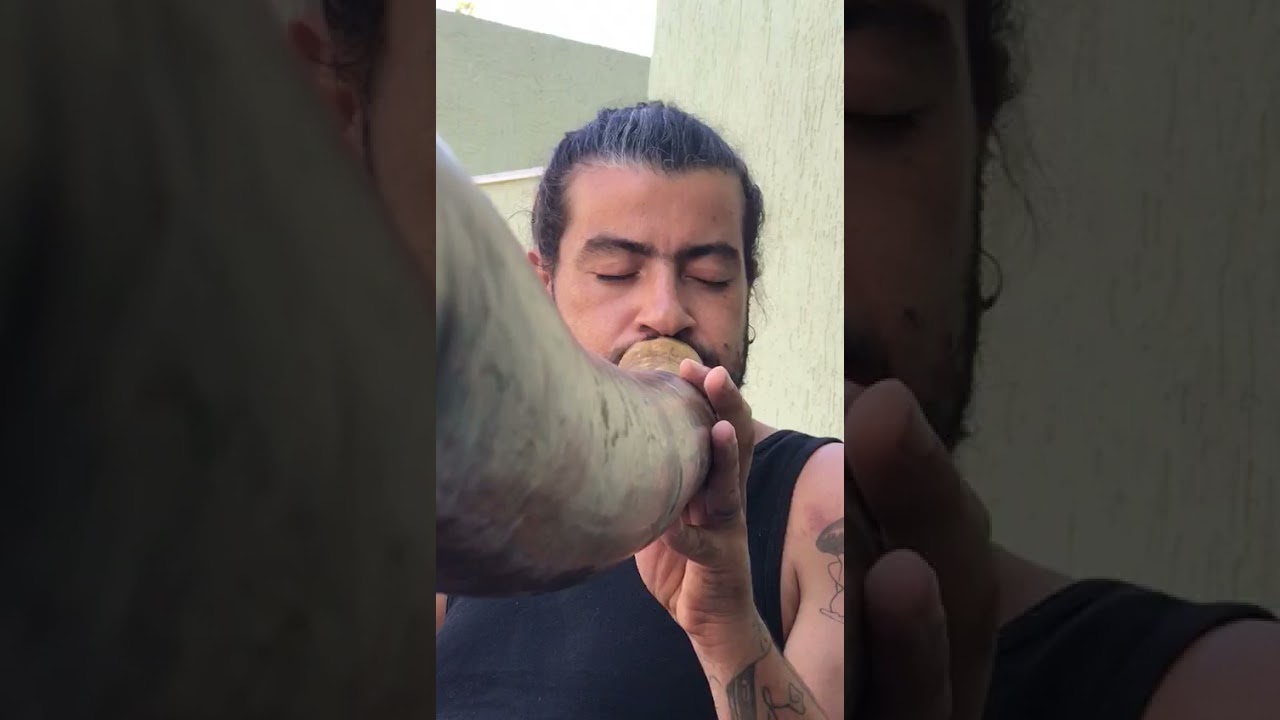
Thanks to the regular practice of the didgeridoo, I reached a recognized professional level, in fact I am approved by "World-Wide Didgeridoo directory" as Players - Makers and Teacher.
Currently I am proud to be the only manufacturer and professional player in Tunisia, vector of a culture still unknown and which has existed since the dawn of time and I wish to communicate this knowledge to the youngest to leave behind me a new generation of football player. modern didgeridoo.

I have spent a good part of my life studying the relationship between object and sound. As a multi-instrumentalist at the base percussionist at the Conservatory and after having been the jack-of-all-trades, I made myself known on the Internet by original interpretations with the didgeridoo deconstructed around the Tunisian rhythmic heritage I play alone, thanks to a palette of several instruments, some imagined by me, spiritual repertoires and enough for the flow. Music is certainly the most difficult art to explain. Music is only made up of immateriality, sounds, rhythms, and magic ... Because if music could be said with words, it would be literature!

New music is even more elusive, because there are not many points of comparison, it cannot be put away, nor easily categorized. The goal of music is to move, to light up stars in the eyes of those who listen to it. I taste the pleasure of making new sound alloys by making the music that I love flow together. So my music is constantly expanding its limits ... It vibrates today in a creative musical universe with clear spatial resonances, between sufficient music, spiritual and ultra modern. the music that lives in me is mixed music. I am nourished by jazz, soul, oriental music, stambeli, African music, ethnic music, tribal, native rhythm. I am crazy about the rhythm.
Since my earliest childhood, I have dreamed only of freedom, beauty and art nouveau ... Questioning oneself, discovering what we do not know or inventing what does not yet exist, n isn't it one of the most exciting things in life?
Education
Pedagogically, the student will learn to:

Listen: the sounds of the instrument to create many and always new ones.

Listening: another style of playing, in order to hear new sounds and try to reproduce them.

Breathe: knowing how to breathe has many virtues for the whole body. To approach the practice of the didgeridoo, conscious breathing is worked on and becomes essential.

Feel your body: accept to listen to your body.

Although it is easy to access, to emit sounds correctly it is necessary to be aware of the interaction of the organs for the production of sounds and then in the work of rhythms.

Persevere: without perseverance, there is no correct result possible.

Concentration: in music, whatever the instrument practiced, concentration is necessary and essential.

Accept novelty: get out of stereotypes and be open-minded to discover another musical practice.

On the pedagogical level, the student will be put in a situation of:

Discover the didgeridoo while listening.

Verbalize, put into words what they feel, hear.

Verbalize what everyone feels and understands. Going from action to putting it into words allows cognitively to build knowledge.

Practice through discovery the student will be able to be active. The production of the first sounds can be difficult but also very motivating. Through this very active participation, the enthusiasm is very strong.

Challenge yourself and others. Making more and more sounds, different sounds, longer and longer sounds quickly becomes a source of pleasure.

Understand by feeling your body, the interactions between organs and the effects produced on sounds.

The pupil is thus active and actors.

On the educational level, the student will be able to use and transfer his knowledge:

In everyday life: knowing how to breathe helps to regulate your emotions.

In professional life, knowing how to listen to others is essential, knowing how to breathe allows you to postpone your reactions and to regulate your stress.

The openness of mind necessary for the practice of this unconventional instrument is undoubtedly present when choosing the instrument, but one can think that a more in-depth discovery will accentuate this quality.


The program of a one-session discovery course:
Duration: 4 hours

Presentation of the didgeridoo and its history.

Discovery of the different organs that can create sound: lungs, vocal cords, tongue, cheeks, throat, diaphragm, jaw and lips.

Breathing exercise. Heating of the main organs: lips, cheeks, vocal cords.

Initiation for a first discovery of the basic sound also called: the drone.

Discovery and practice of different sounds in relation to the different organs:
- Vocal cords: animal cries.
- The cheeks and the tongue: the vowels: OU-OAEUI.
- Language and throat: simple consonants: TE and KE.
- The lips: the supercharging.
- Simple rhythm creation with the beatbox technique.

Each session is enhanced by a small musical performance. During the various exercises, the importance of a correctly carried out breathing is underlined. The number of sessions can of course vary depending on expectations.
Experience / Qualifications
I am a professional musician, player and manufacturer of Australian didgeridoo for more than 8 years I master advanced rhythmic and harmonic techniques, holder of a professional card obtained in April 2019 percussion specialty, didgeridoo instrument.
From childhood I was surrounded by musical instruments in the family home which only has music lovers of all generations. Self-taught, however, I enroll for a short period at the conservatory to learn the basics of rhythm. Rock lover like most young people, I bought drums and learned to play them on my own, then I turned to other instruments, always in search of new sounds. This quest goes beyond the restricted circle of classical instruments and is part of the smallest daily deeds and gestures. An unusual object picked up on a sidewalk, a sound produced by a natural element, the sound of branches, flowing water, are all sources that I collect over time by recording them and that I keep preciously. I consider that the city pollutes our ears and alienates us and that music is everywhere, you just have to listen: the noise that the wind makes on a beach, added to that of the waves, is a pure marvel. Hearing is a vital sense for the artist.
I am basically a percussionist, I started taking percussion lessons at a very young age, I continued my journey over the years, I acquired mastery of several instruments such as: the harp, the didgeridoo, the gombri, douf and several other so-called aboriginal instruments.
I offer a unique and innovative course. Indeed, the didgeridoo is relatively unknown to the general public and therefore attracts the curiosity of young and old alike. The course offered is accessible to all because it is very fun. She is always very motivating by the giggles that the first sounds emitted. During the course the student will be actor and active.

The didgeridoo, this wind instrument allows:
- to know his body because it is he who authorizes the emission of sound,
- work on your breathing,
- to develop their creativity,
- express themselves musically very quickly.
The practice of the didgeridoo does not require any particular knowledge, it is enough to have a body ... and the technique will be brought to you during the intervention.

The program alternates between vocal expression, experimentation with sounds and noises, approach to percussion with simple rhythms, development of listening and movement, moments of relaxation and relaxation.
Age
Teenagers (13-17 years old)
Adults (18-64 years old)
Seniors (65+ years old)
Student level
Beginner
Intermediate
Duration
60 minutes
120 minutes
The class is taught in
French
Arabic
English
Reviews
Availability of a typical week
(GMT -05:00)
New York
at teacher icon
Online via webcam
Mon
Tue
Wed
Thu
Fri
Sat
Sun
00-04
04-08
08-12
12-16
16-20
20-24
The most complete and effective course to learn to play the handpan quickly.
The handpan is a very easy instrument to use and learn. It is indeed possible to learn the handpan to intuitively practice your own music. The advantage that this musical instrument offers is that there is no musical basis required to know how to play it.
Read more
If you plan to visit Tunisia, I am your man, to know everything about Tunisia, the best bars where you have to go, or find what, the best plans to find everything. In addition to the language.
Read more
Show more
arrow icon
Similar classes
arrow icon previousarrow icon next
verified badge
I have a master degree in music composition at the Royal Conservatoire Den Haag. I have been working in music composition for 10 year. This is a class where you are going to learn how to work with your own composition ideas as well get acquaintance to new composition tools and approach.
This is open for different types of music approach:
- contemporary classical music
- electronic music production/Ableton (any style you want)
- Music for Cinema (theory and how to do mockups with samples)
-Generative Music (Using max/msp and reaktor)
verified badge
You often spend time behind your computer, sound modules, synths or MIDI devices to create solid beats, a hypnotic groove, dreamy soundscapes or a compelling story. In short, you've been bitten by electronic music. You want to take your sound to a higher level, but you still have questions about the quality of your sound, live performance, synthesizers, music theory, increasing listenership, acoustics, about your software, etc... You've come to the right place address if you have such questions. I would like to help you so that you can achieve your musical goals faster and in an efficient and budget-friendly manner.

What do I offer?
- Lessons on the following Digital Audio Workstations (DAW): Reason Studios, Ableton Live, Reaper, Fruity Loops
- Lessons about sound synthesis (Sound Design) via synthesizers, drum machines and effects
- General guidance/coaching in overcoming the obstacles associated with producing (e.g. knowledge about mixing, mastering, modular setup, music theory, computer/laptop needs, acoustics and psychoacoustics, mental challenges, ...)

Do you have a question or would you like more information?
Feel free to contact me :).
verified badge
< Learning Piano is not merely about playing the piano >

Before starting to learn the piano, it’s essential to recognize that :

'' What we are actually learning is "Music", but not only "Piano". ''

The goal of learning any instrument is to acquire the language of music, enabling us to express ourselves and enjoy music with others. Playing the piano is for creating beautiful sounds, not really for developing finger speed or strength. That’s the function of gym.

< Music is like cooking >

When we cook, to make roast beef tender, of course, it’s nice to have a tender heart, but without knowing how to control the temperature, the roast beef won’t become tender merely by our tender heart.

By only adding salt, the dish won’t be sweet. Similarly, simply playing or writing a C major triad chord won’t convey a sorrowful feeling.

To create the feeling we want, no matter how much sentiment we have in our hearts, to convey it via music, it needs to be translated into the language which the piano can understand, which means, how we press and lift the keys and pedals. Similarly, when we compose, it needs to be transferred into chords, and notes we write.


< Difference between an audience and a musician >

There is a common belief that a musician can make music with sentiment or feeling. While it’s partially true, the most essential thing is knowing ‘’How’’ to create the sound that conveys the feeling we want, rather than merely knowing ‘’What’' feeling we want to convey.

The understanding of the mechanism behind music is essential, as cooking, and that is the difference between an audience and a musician. As an audience, one can simply feel the music. Like a chief who knows how to create a specific flavor to convey, a musician knows how to create the sound which can convey the feeling we want. While knowing which feeling we want is great, it’s merely the first step. Your emotions are not too different from Chopin, Beethoven, Adele or Taylor Swift, otherwise, they can’t resonate with you. But they know how to create the sound that conveys the feeling they want to their audience.

< Course Content >

I consider my course to be a form of "Music Consultation" because it contains a wide range of subjects that are essential to a professional musician. While we focus on piano playing, there are also music theory, music history, instrument construction, ergonomics for performers, analysis of composer styles, composition, arrangement, recording, MIDI, computer music, the physics of sound, and more.
In avoid of confusion, let’s still call my course as "Piano Course”.

< Duration >

For each course, I will reserve at least 70 minutes in my schedule for you, including 60 minutes of class time and an additional 10 minutes for discussion and any questions you may have. This will ensure that your courses are not rushed by the next student. This ensures that there is enough time for you to solve your piano and music problems.

< Recording >

I highly encourage my students to record their progress. This can provide an objective standard for comparison and help you analyze your playing precisely. In my nine years of experience teaching music, I've found many students, including those advanced, already play certain sections very well, while other sections may not be not well enough. But they still try to improving those fine sections, while not aware of those weak sections.
Without an objective reference, it’s hard to distribute our effort precisely. This can lead to not only unstable performance, but also practicing without a precise goal can easily reduce enthusiasm. Recording your results and comparing them with those recordings you like on YouTube or Spotify can be an effective way to analyze your playing and set precise goals.

If you have a digital piano, I can help you produce a video of your performance for each session. This can be a tangible record of your efforts and you can share it with your friends and family via YouTube or other platforms.
verified badge
From connection to production through and configuration and until the final result is obtained on social networks or music platforms, you will learn all the intermediate steps to spread your creativity in the connected world.

With specific expertise on Apple Logic Proc X and Ableton Live, the same principles are valid on any DAW (Digital Audio Workstation) as well as on the configuration that is specific to you.

I also advise you on the hardware (physical hardware / software) to buy according to your specific needs.

This applies to anyone without age barrier, as long as the will and passion is there ...
verified badge
I specialise in writing and composing music for all levels. The student will need to have a music programme such as Logic or Ableton in order to be able to take this class.

The topics we will cover are:
Structure and arrangment.
Rhythm.
Harmony.
Advanced Harmony.
Bass Lines.
Lyrics.
Instrumentation.
Arrangement.
verified badge
Hello, My name is Manu and it is with pleasure that I will be your teacher.

I've been doing MAO (Composition and Production) for 8 years now and working on Logic Pro X. I mainly compose Electro-Funk with influences ranging from Daft Punk to Justice through Breakbot.


What I offer in my classes:

- Basic tools and advanced tools of Logic Pro X.
- Production techniques (ranging from the model to the creation of a song).
- Notions of compositions and arrangement.
- Instrumental and theoretical basis (Keyboard, Guitar and Bass)
- Monitoring of an ongoing project (Coaching, advice, recommendation).

Manu
verified badge
Composer and producer for more than 10 years on Ableton, I propose to accompany you in your artistic journey, whether you are just starting out or already well invested!

My lessons are always adapted to the needs of the student, so together we could:
- Learn to compose on Ableton or other DAW (music software)
- Learn the sound design adapted to the genre you want to produce
- Learn to mix
- Learn mastering
- Continue a piece you are on, to make it take on another dimension
- Make "guided" production
- Talk about hardware, software and support you in your choices

Classes can take place:
- in Visio on Zoom (which I recommend, we are both with a sound system with which we are used, the audio quality remains unchanged and the course is recorded to see it in replay at home!)
- at home, for a travel fee

Do not hesitate to contact me if you have any questions or special wishes!
verified badge
Have you always wanted to write music for movies, ads or videogames, but didn’t know where or how to start? This is your place.

We are Alonso and Vincent, two composers with different formation but that are actively working in the field of Film Scoring.
Our classes are developed for students of different ages.

Let us explain! If you are 15 years old or just 40 but want to immerse into the music world, we can help, whether you have previous experience or not in the field.

What will you learn with our lessons:
- Beginner: we’ll guide you through your first steps in your digital audio workstation. With pre-existing sample packs, you’ll discover how to build music with sound blocks, and become your very own producer/beatmaker!

-Intermediate: we’ll show you how to deal with MIDI programming. You will write the notes, yourself, of your own digital symphony, with free virtual instruments from state-of-the-art production facilities, always following the style you want to follow. The music is yours!

-Advanced: we’ll bring you to Hollywood’s antechamber: our most advanced tips about writing music, mixing, mastering, how to write your own readable sheet music... You’ll be the next Hans Zimmer in no time.
verified badge
I’m a Music Producer with experience in sound design and composition for moving image.
I have been using Ableton as my main daw for 12 years for electronic music production, ranging from pop and experimental music to studio recording sessions.

In the last few years, I’ve been focusing on assisting producers and songwriters with developing and improving their live electronic performance workflow. I can also provide consultancy on this topic, whether you’re interested in performing or rearranging your material.

This course is recommended for anyone who wants to discover the basics of Ableton Live or learn new music production techniques to extend their practice.
The course is flexible and can be tailored to everybody’s needs.

You’re sincerely encouraged to contact me to share your ideas and tell me about your projects to find a way together to develop your work and extend your Ableton knowledge by doing so.
verified badge
🎛️ Music Production Lessons & Creative Coaching 🎶

Want to learn how to create, record, and refine your own music in Logic Pro X? Whether you’re a complete beginner or already producing your own tracks, I offer online lessons and personalized production coaching to help you grow and elevate your sound.

If you’re just starting out, we’ll build a solid foundation:

- MIDI & audio basics
- Arrangement & structure
- Sound design & effects
- Vocal editing
- Mixing fundamentals
- Workflow tips & creative approaches

Already producing? Great — then I offer tailored production advice and feedback. You can bring in your tracks, questions, or challenges, and I’ll help you with:

- Song structure & dynamics
- Sound choices & layers
- Mix clarity & depth
- Artistic direction
- Developing your unique sonic identity

The sessions can be fully online or live, flexible, and built around your needs.

I combine my experience as a pop producer and artist with my background in classical music theory and a degree from the Conservatorium van Amsterdam (Pop).

Whether you're starting from scratch or fine-tuning a nearly finished track — I’m here to help you move forward with clarity, confidence, and creativity.
verified badge
Do you want to learn how to compose, mix or finalize your tracks with real sound?
Are you looking for someone who can explain things clearly, listen to you, encourage you and help you move forward without going around in circles?
Welcome.

My name is Tom and for 10 years I have been helping artists and enthusiasts create their music, better use their tools (Ableton, Reaper, Logic, etc.) and, above all, find their own sound.

· A clear, personalized method, at your own pace
· Solid foundations if you are a beginner (handling, composition, arrangements, etc.)
· Mixing and mastering courses
· Tools to unlock your creativity
· And an artistic eye to help you achieve your vision
Whether you are a complete beginner, with no knowledge of computer music or music, I will guide you step by step so that you quickly feel comfortable with the tools and can create your first pieces.

If you're self-taught, you may have already accumulated a lot of knowledge, but in a somewhat disorganized way: together, we'll structure all of that, clarify your basics and solidify your approach.
And if you are an artist already on the path, with projects or a vision under construction, I help you refine your universe, professionalize your sound, and go further in your artistic direction.
verified badge
Discover a simple, modern, and motivating approach to the piano, accessible to everyone—whether you're a complete beginner or simply want to get back into playing.
With Piano for All, you will progress quickly thanks to a clear, lively method adapted to your level.
In just a few weeks, you will be able to play your first pieces and gain confidence in your playing.

Here, there's no pressure: just the pleasure of moving forward step by step, at your own pace, in a friendly and encouraging atmosphere.

Because it's never too early — or too late — to make your fingers sing on the keyboard. 🎶
verified badge
This class introduces the core concepts of film scoring and how music shapes story, emotion, and narrative in film and television. Students will learn how to support and move images through music, exploring timing, mood, theme, and structure. Lessons are tailored to each student’s interests and level, from complete beginners to advanced composers, and can focus on electronic, orchestral, or hybrid approaches.

The course also includes analysis and deconstruction of existing film scores to understand compositional techniques and storytelling strategies. Students will learn how to set up and optimize their digital audio workstation for film scoring, define personal creative goals, and work with industry-standard orchestral sample libraries and synthesizers such as Spitfire Audio, Orchestral Tools, and Cinematic Studio Series. Films with sound design and no music can be provided for hands-on scoring exercises, enabling practical experience working directly to picture.
verified badge
Do you want to produce your tracks without getting lost in the technical details? I'll teach you Cubase and DAW software the way I learned it myself: without music theory, but with method and creativity.

The goal is not to apply formulas, but to develop a working method adapted to each project. This may involve analyzing a piece in progress, resolving technical or creative blocks, optimizing sound, or even organizing a Cubase session.

I offer concrete tools, attentive listening, and precise support to move your musical project forward in the right direction.

About the course:

Composition & Arrangement
Musical structure & storytelling: learning to build solid and coherent pieces (intro, bridges, choruses, etc.).

Creating guitar riffs and harmonies: rhythmic, melodic and stylistic work according to your level.

Text writing & vocal placement: rhythm, phrasing, accuracy of intentions.

Organization in the DAW (Cubase): clear structure, tempo, grids, dynamics.

Art direction & atmospheres: defining a unique and coherent sound universe, from the riff to the background texture.

Pre-production & Sound Design
Effective session preparation: choice of tools, sounds, project organization.

Custom guitar/bass sound creation: virtual amps, IRs, custom effects chains.

Modern recording techniques: layering, harmonies, double-tracking, multiple takes.

Sound sculpture & textures: asserting the personality of each instrument.

Integration of atmospheres and textures: cinematic, orchestral or electronic textures.

Advanced sound design: modulations, automation, unconventional effects.

Recording & Editing
Effective voice recording: artistic direction, placement, interpretation.

Fast & clean editing: assembly, alignment, natural corrections.

Collaboration & Communication
Knowing how to work with other musicians: conveying ideas, communicating with a mixer or sound engineer, maintaining an overall vision.

Mixing & Finalization
Clear and productive session organization: routing, buses, colors, naming.

Using the main mixing tools:

Compression: dynamic management

EQ: Frequency balance

Delay & Reverb: space and depth

Limiting: level control

Special FX (ring mods, filters, etc.): to go further with the texture

Export preparation: stereo, stems, separate tracks, formats suitable for mixing or mastering.

In summary
The goal is not to follow a fixed method, but to make concrete progress on a real musical project, regardless of the starting level.
The idea is to start with a desire, a sound, a riff, a feeling... and turn it into a solid, inspired, controlled piece.

This is what I have been doing for twenty years, and what I pass on here with rigor.

Online lessons are available. Cubase is recommended but not required. You can work with other DAWs or directly with stems/audio files as needed.
Video thumbnail
Play icon
Jathb's video
message icon
Contact Jathb
repeat students icon
1st lesson is backed
by our
Good-fit Instructor Guarantee
Similar classes
arrow icon previousarrow icon next
verified badge
I have a master degree in music composition at the Royal Conservatoire Den Haag. I have been working in music composition for 10 year. This is a class where you are going to learn how to work with your own composition ideas as well get acquaintance to new composition tools and approach.
This is open for different types of music approach:
- contemporary classical music
- electronic music production/Ableton (any style you want)
- Music for Cinema (theory and how to do mockups with samples)
-Generative Music (Using max/msp and reaktor)
verified badge
You often spend time behind your computer, sound modules, synths or MIDI devices to create solid beats, a hypnotic groove, dreamy soundscapes or a compelling story. In short, you've been bitten by electronic music. You want to take your sound to a higher level, but you still have questions about the quality of your sound, live performance, synthesizers, music theory, increasing listenership, acoustics, about your software, etc... You've come to the right place address if you have such questions. I would like to help you so that you can achieve your musical goals faster and in an efficient and budget-friendly manner.

What do I offer?
- Lessons on the following Digital Audio Workstations (DAW): Reason Studios, Ableton Live, Reaper, Fruity Loops
- Lessons about sound synthesis (Sound Design) via synthesizers, drum machines and effects
- General guidance/coaching in overcoming the obstacles associated with producing (e.g. knowledge about mixing, mastering, modular setup, music theory, computer/laptop needs, acoustics and psychoacoustics, mental challenges, ...)

Do you have a question or would you like more information?
Feel free to contact me :).
verified badge
< Learning Piano is not merely about playing the piano >

Before starting to learn the piano, it’s essential to recognize that :

'' What we are actually learning is "Music", but not only "Piano". ''

The goal of learning any instrument is to acquire the language of music, enabling us to express ourselves and enjoy music with others. Playing the piano is for creating beautiful sounds, not really for developing finger speed or strength. That’s the function of gym.

< Music is like cooking >

When we cook, to make roast beef tender, of course, it’s nice to have a tender heart, but without knowing how to control the temperature, the roast beef won’t become tender merely by our tender heart.

By only adding salt, the dish won’t be sweet. Similarly, simply playing or writing a C major triad chord won’t convey a sorrowful feeling.

To create the feeling we want, no matter how much sentiment we have in our hearts, to convey it via music, it needs to be translated into the language which the piano can understand, which means, how we press and lift the keys and pedals. Similarly, when we compose, it needs to be transferred into chords, and notes we write.


< Difference between an audience and a musician >

There is a common belief that a musician can make music with sentiment or feeling. While it’s partially true, the most essential thing is knowing ‘’How’’ to create the sound that conveys the feeling we want, rather than merely knowing ‘’What’' feeling we want to convey.

The understanding of the mechanism behind music is essential, as cooking, and that is the difference between an audience and a musician. As an audience, one can simply feel the music. Like a chief who knows how to create a specific flavor to convey, a musician knows how to create the sound which can convey the feeling we want. While knowing which feeling we want is great, it’s merely the first step. Your emotions are not too different from Chopin, Beethoven, Adele or Taylor Swift, otherwise, they can’t resonate with you. But they know how to create the sound that conveys the feeling they want to their audience.

< Course Content >

I consider my course to be a form of "Music Consultation" because it contains a wide range of subjects that are essential to a professional musician. While we focus on piano playing, there are also music theory, music history, instrument construction, ergonomics for performers, analysis of composer styles, composition, arrangement, recording, MIDI, computer music, the physics of sound, and more.
In avoid of confusion, let’s still call my course as "Piano Course”.

< Duration >

For each course, I will reserve at least 70 minutes in my schedule for you, including 60 minutes of class time and an additional 10 minutes for discussion and any questions you may have. This will ensure that your courses are not rushed by the next student. This ensures that there is enough time for you to solve your piano and music problems.

< Recording >

I highly encourage my students to record their progress. This can provide an objective standard for comparison and help you analyze your playing precisely. In my nine years of experience teaching music, I've found many students, including those advanced, already play certain sections very well, while other sections may not be not well enough. But they still try to improving those fine sections, while not aware of those weak sections.
Without an objective reference, it’s hard to distribute our effort precisely. This can lead to not only unstable performance, but also practicing without a precise goal can easily reduce enthusiasm. Recording your results and comparing them with those recordings you like on YouTube or Spotify can be an effective way to analyze your playing and set precise goals.

If you have a digital piano, I can help you produce a video of your performance for each session. This can be a tangible record of your efforts and you can share it with your friends and family via YouTube or other platforms.
verified badge
From connection to production through and configuration and until the final result is obtained on social networks or music platforms, you will learn all the intermediate steps to spread your creativity in the connected world.

With specific expertise on Apple Logic Proc X and Ableton Live, the same principles are valid on any DAW (Digital Audio Workstation) as well as on the configuration that is specific to you.

I also advise you on the hardware (physical hardware / software) to buy according to your specific needs.

This applies to anyone without age barrier, as long as the will and passion is there ...
verified badge
I specialise in writing and composing music for all levels. The student will need to have a music programme such as Logic or Ableton in order to be able to take this class.

The topics we will cover are:
Structure and arrangment.
Rhythm.
Harmony.
Advanced Harmony.
Bass Lines.
Lyrics.
Instrumentation.
Arrangement.
verified badge
Hello, My name is Manu and it is with pleasure that I will be your teacher.

I've been doing MAO (Composition and Production) for 8 years now and working on Logic Pro X. I mainly compose Electro-Funk with influences ranging from Daft Punk to Justice through Breakbot.


What I offer in my classes:

- Basic tools and advanced tools of Logic Pro X.
- Production techniques (ranging from the model to the creation of a song).
- Notions of compositions and arrangement.
- Instrumental and theoretical basis (Keyboard, Guitar and Bass)
- Monitoring of an ongoing project (Coaching, advice, recommendation).

Manu
verified badge
Composer and producer for more than 10 years on Ableton, I propose to accompany you in your artistic journey, whether you are just starting out or already well invested!

My lessons are always adapted to the needs of the student, so together we could:
- Learn to compose on Ableton or other DAW (music software)
- Learn the sound design adapted to the genre you want to produce
- Learn to mix
- Learn mastering
- Continue a piece you are on, to make it take on another dimension
- Make "guided" production
- Talk about hardware, software and support you in your choices

Classes can take place:
- in Visio on Zoom (which I recommend, we are both with a sound system with which we are used, the audio quality remains unchanged and the course is recorded to see it in replay at home!)
- at home, for a travel fee

Do not hesitate to contact me if you have any questions or special wishes!
verified badge
Have you always wanted to write music for movies, ads or videogames, but didn’t know where or how to start? This is your place.

We are Alonso and Vincent, two composers with different formation but that are actively working in the field of Film Scoring.
Our classes are developed for students of different ages.

Let us explain! If you are 15 years old or just 40 but want to immerse into the music world, we can help, whether you have previous experience or not in the field.

What will you learn with our lessons:
- Beginner: we’ll guide you through your first steps in your digital audio workstation. With pre-existing sample packs, you’ll discover how to build music with sound blocks, and become your very own producer/beatmaker!

-Intermediate: we’ll show you how to deal with MIDI programming. You will write the notes, yourself, of your own digital symphony, with free virtual instruments from state-of-the-art production facilities, always following the style you want to follow. The music is yours!

-Advanced: we’ll bring you to Hollywood’s antechamber: our most advanced tips about writing music, mixing, mastering, how to write your own readable sheet music... You’ll be the next Hans Zimmer in no time.
verified badge
I’m a Music Producer with experience in sound design and composition for moving image.
I have been using Ableton as my main daw for 12 years for electronic music production, ranging from pop and experimental music to studio recording sessions.

In the last few years, I’ve been focusing on assisting producers and songwriters with developing and improving their live electronic performance workflow. I can also provide consultancy on this topic, whether you’re interested in performing or rearranging your material.

This course is recommended for anyone who wants to discover the basics of Ableton Live or learn new music production techniques to extend their practice.
The course is flexible and can be tailored to everybody’s needs.

You’re sincerely encouraged to contact me to share your ideas and tell me about your projects to find a way together to develop your work and extend your Ableton knowledge by doing so.
verified badge
🎛️ Music Production Lessons & Creative Coaching 🎶

Want to learn how to create, record, and refine your own music in Logic Pro X? Whether you’re a complete beginner or already producing your own tracks, I offer online lessons and personalized production coaching to help you grow and elevate your sound.

If you’re just starting out, we’ll build a solid foundation:

- MIDI & audio basics
- Arrangement & structure
- Sound design & effects
- Vocal editing
- Mixing fundamentals
- Workflow tips & creative approaches

Already producing? Great — then I offer tailored production advice and feedback. You can bring in your tracks, questions, or challenges, and I’ll help you with:

- Song structure & dynamics
- Sound choices & layers
- Mix clarity & depth
- Artistic direction
- Developing your unique sonic identity

The sessions can be fully online or live, flexible, and built around your needs.

I combine my experience as a pop producer and artist with my background in classical music theory and a degree from the Conservatorium van Amsterdam (Pop).

Whether you're starting from scratch or fine-tuning a nearly finished track — I’m here to help you move forward with clarity, confidence, and creativity.
verified badge
Do you want to learn how to compose, mix or finalize your tracks with real sound?
Are you looking for someone who can explain things clearly, listen to you, encourage you and help you move forward without going around in circles?
Welcome.

My name is Tom and for 10 years I have been helping artists and enthusiasts create their music, better use their tools (Ableton, Reaper, Logic, etc.) and, above all, find their own sound.

· A clear, personalized method, at your own pace
· Solid foundations if you are a beginner (handling, composition, arrangements, etc.)
· Mixing and mastering courses
· Tools to unlock your creativity
· And an artistic eye to help you achieve your vision
Whether you are a complete beginner, with no knowledge of computer music or music, I will guide you step by step so that you quickly feel comfortable with the tools and can create your first pieces.

If you're self-taught, you may have already accumulated a lot of knowledge, but in a somewhat disorganized way: together, we'll structure all of that, clarify your basics and solidify your approach.
And if you are an artist already on the path, with projects or a vision under construction, I help you refine your universe, professionalize your sound, and go further in your artistic direction.
verified badge
Discover a simple, modern, and motivating approach to the piano, accessible to everyone—whether you're a complete beginner or simply want to get back into playing.
With Piano for All, you will progress quickly thanks to a clear, lively method adapted to your level.
In just a few weeks, you will be able to play your first pieces and gain confidence in your playing.

Here, there's no pressure: just the pleasure of moving forward step by step, at your own pace, in a friendly and encouraging atmosphere.

Because it's never too early — or too late — to make your fingers sing on the keyboard. 🎶
verified badge
This class introduces the core concepts of film scoring and how music shapes story, emotion, and narrative in film and television. Students will learn how to support and move images through music, exploring timing, mood, theme, and structure. Lessons are tailored to each student’s interests and level, from complete beginners to advanced composers, and can focus on electronic, orchestral, or hybrid approaches.

The course also includes analysis and deconstruction of existing film scores to understand compositional techniques and storytelling strategies. Students will learn how to set up and optimize their digital audio workstation for film scoring, define personal creative goals, and work with industry-standard orchestral sample libraries and synthesizers such as Spitfire Audio, Orchestral Tools, and Cinematic Studio Series. Films with sound design and no music can be provided for hands-on scoring exercises, enabling practical experience working directly to picture.
verified badge
Do you want to produce your tracks without getting lost in the technical details? I'll teach you Cubase and DAW software the way I learned it myself: without music theory, but with method and creativity.

The goal is not to apply formulas, but to develop a working method adapted to each project. This may involve analyzing a piece in progress, resolving technical or creative blocks, optimizing sound, or even organizing a Cubase session.

I offer concrete tools, attentive listening, and precise support to move your musical project forward in the right direction.

About the course:

Composition & Arrangement
Musical structure & storytelling: learning to build solid and coherent pieces (intro, bridges, choruses, etc.).

Creating guitar riffs and harmonies: rhythmic, melodic and stylistic work according to your level.

Text writing & vocal placement: rhythm, phrasing, accuracy of intentions.

Organization in the DAW (Cubase): clear structure, tempo, grids, dynamics.

Art direction & atmospheres: defining a unique and coherent sound universe, from the riff to the background texture.

Pre-production & Sound Design
Effective session preparation: choice of tools, sounds, project organization.

Custom guitar/bass sound creation: virtual amps, IRs, custom effects chains.

Modern recording techniques: layering, harmonies, double-tracking, multiple takes.

Sound sculpture & textures: asserting the personality of each instrument.

Integration of atmospheres and textures: cinematic, orchestral or electronic textures.

Advanced sound design: modulations, automation, unconventional effects.

Recording & Editing
Effective voice recording: artistic direction, placement, interpretation.

Fast & clean editing: assembly, alignment, natural corrections.

Collaboration & Communication
Knowing how to work with other musicians: conveying ideas, communicating with a mixer or sound engineer, maintaining an overall vision.

Mixing & Finalization
Clear and productive session organization: routing, buses, colors, naming.

Using the main mixing tools:

Compression: dynamic management

EQ: Frequency balance

Delay & Reverb: space and depth

Limiting: level control

Special FX (ring mods, filters, etc.): to go further with the texture

Export preparation: stereo, stems, separate tracks, formats suitable for mixing or mastering.

In summary
The goal is not to follow a fixed method, but to make concrete progress on a real musical project, regardless of the starting level.
The idea is to start with a desire, a sound, a riff, a feeling... and turn it into a solid, inspired, controlled piece.

This is what I have been doing for twenty years, and what I pass on here with rigor.

Online lessons are available. Cubase is recommended but not required. You can work with other DAWs or directly with stems/audio files as needed.
Good-fit Instructor Guarantee
favorite button
message icon
Contact Jathb