


Come and learn with expert and experienced Science teacher Checkpoint Stage 8&9 (1113)

From 28 £ /h

Science Checkpoint Stage 8/9: Preparation of Salts – Interactive and Simplified Learning
Are you struggling to understand how salts are prepared in chemistry? Join my interactive and easy-to-follow lesson on Apprentus, where I will simplify the process of preparing salts and ensure you gain a clear understanding of the topic.
Lesson Description
In this engaging online lesson, I will guide students through the preparation of salts, covering key concepts such as:
✅ Types of salts (soluble and insoluble)
✅ Methods of salt preparation (neutralization, precipitation, direct combination, etc.)
✅ Step-by-step practical examples
✅ Safety precautions and common mistakes to avoid
How Will I Deliver the Lesson?
I use a student-friendly approach that makes complex ideas simple and fun:
✔ Visual explanations – Diagrams and animations for easy understanding
✔ Live step-by-step demonstrations– Showing how salts are prepared in real time
✔ Interactive Q&A– Students can ask questions anytime
✔ Practice problems & quizzes– To reinforce learning
Why Book This Class?
✅ Experienced Science Lecturer– I specialize in making science easy to understand.
✅ Simple & Engaging Lessons – No more confusion in chemistry!
✅ Personalized Support – I address individual student challenges.
✅ Affordable & Flexible Schedule – Learn at your own pace.
Don't miss out! Book your class now on Apprentus and master the preparation of salts with ease!
Are you struggling to understand how salts are prepared in chemistry? Join my interactive and easy-to-follow lesson on Apprentus, where I will simplify the process of preparing salts and ensure you gain a clear understanding of the topic.
Lesson Description
In this engaging online lesson, I will guide students through the preparation of salts, covering key concepts such as:
✅ Types of salts (soluble and insoluble)
✅ Methods of salt preparation (neutralization, precipitation, direct combination, etc.)
✅ Step-by-step practical examples
✅ Safety precautions and common mistakes to avoid
How Will I Deliver the Lesson?
I use a student-friendly approach that makes complex ideas simple and fun:
✔ Visual explanations – Diagrams and animations for easy understanding
✔ Live step-by-step demonstrations– Showing how salts are prepared in real time
✔ Interactive Q&A– Students can ask questions anytime
✔ Practice problems & quizzes– To reinforce learning
Why Book This Class?
✅ Experienced Science Lecturer– I specialize in making science easy to understand.
✅ Simple & Engaging Lessons – No more confusion in chemistry!
✅ Personalized Support – I address individual student challenges.
✅ Affordable & Flexible Schedule – Learn at your own pace.
Don't miss out! Book your class now on Apprentus and master the preparation of salts with ease!
Extra information
For my online tutoring sessions, please have a reliable computer or tablet, stable internet, and headphones with a microphone. You’ll need a webcam for face-to-face learning and a quiet, well-lit study space with a notebook and pen. Have any necessary textbooks or materials ready, and install the video conferencing app we’ll use (e.g., Zoom or Google Meet). A positive attitude and willingness to ask questions are key—let’s make the most of our time together!
Location


At teacher's location :
- RCCG Christ The Overcomer parish, Paris, France
- London, UK
- Germany
- Cyprus
- America
- Italy
- Devos, Belgium
About Me
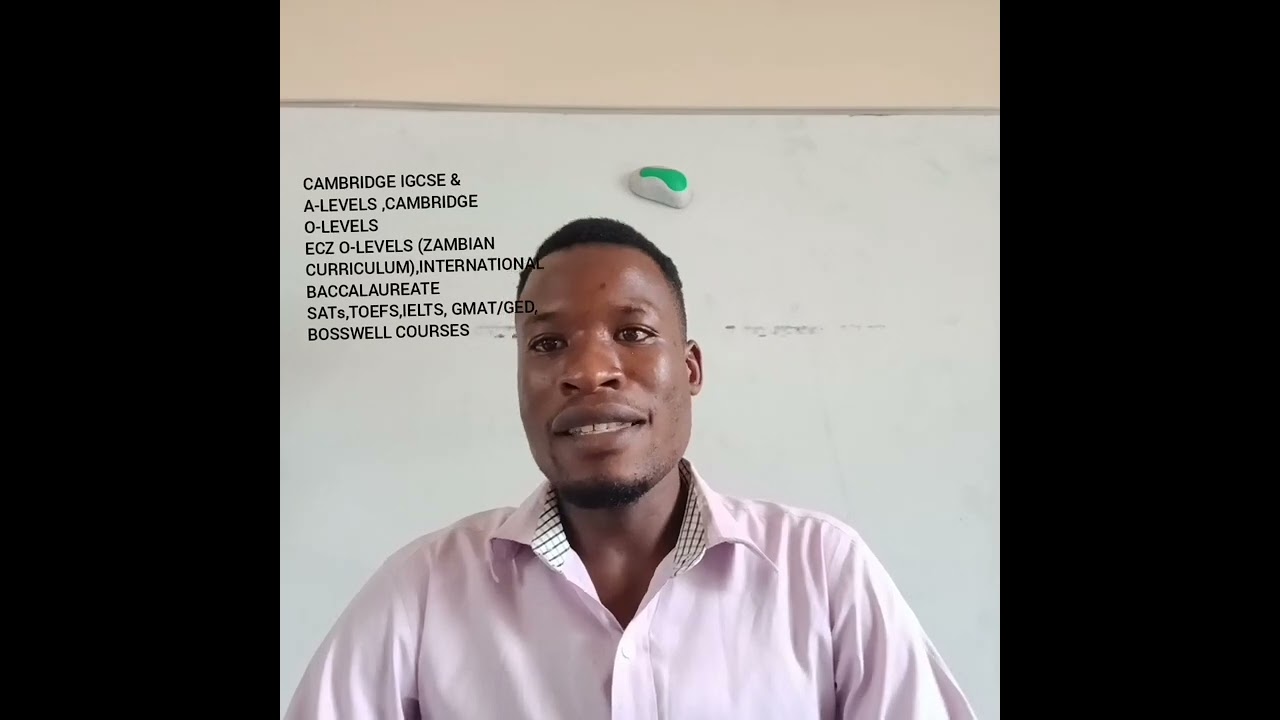
Hello! I am a passionate and experienced teacher specializing in Biology, Chemistry, Mathematics, and Physics. With several years of teaching experience, I have guided students to achieve excellent results in both local and international curricula, including Cambridge, CAMBRIDGE IGCSE & A-LEVELS
CAMBRIDGE O-LEVELS
ECZ O-LEVELS (ZAMBIAN CURRICULUM)
INTERNATIONAL BACCALAUREATE
SATs
TOEFS
IELTS
GMAT/GED
BOSSWELL COURSES
I am committed to delivering lessons tailored to individual student needs, ensuring that each learner develops a deep understanding of the subject and excels in their academic goals. My teaching style emphasizes:
1. Clear explanation of complex concepts.
2. Interactive and engaging lessons to build curiosity.
3.Exam-focused preparation with tips for acing tests.
4 Critical thinking. to apply knowledge practically.
Whether you need help understanding challenging topics, preparing for exams, or boosting your confidence in science and math, I am here to help. I use modern teaching tools and strategies, including online simulations, interactive presentations, and real-world examples, to make learning enjoyable and effective.
I believe every student has the potential to excel with the right guidance, and I am dedicated to helping you unlock that potential. Let’s work together to achieve your academic success!
Qualifications:
- Bachelor’s Degree in SCIENCE with Education( Biology and Chemistry)
- Certified in International Curricula Teaching (Cambridge/IB/etc.)
- Proven track record of student success in international examinations
Availability:
I offer flexible scheduling to accommodate students worldwide. Lessons can be conducted online, ensuring convenience and access to quality education wherever you are.
Book a session today, and let’s begin your journey to academic excellence!
CAMBRIDGE O-LEVELS
ECZ O-LEVELS (ZAMBIAN CURRICULUM)
INTERNATIONAL BACCALAUREATE
SATs
TOEFS
IELTS
GMAT/GED
BOSSWELL COURSES
I am committed to delivering lessons tailored to individual student needs, ensuring that each learner develops a deep understanding of the subject and excels in their academic goals. My teaching style emphasizes:
1. Clear explanation of complex concepts.
2. Interactive and engaging lessons to build curiosity.
3.Exam-focused preparation with tips for acing tests.
4 Critical thinking. to apply knowledge practically.
Whether you need help understanding challenging topics, preparing for exams, or boosting your confidence in science and math, I am here to help. I use modern teaching tools and strategies, including online simulations, interactive presentations, and real-world examples, to make learning enjoyable and effective.
I believe every student has the potential to excel with the right guidance, and I am dedicated to helping you unlock that potential. Let’s work together to achieve your academic success!
Qualifications:
- Bachelor’s Degree in SCIENCE with Education( Biology and Chemistry)
- Certified in International Curricula Teaching (Cambridge/IB/etc.)
- Proven track record of student success in international examinations
Availability:
I offer flexible scheduling to accommodate students worldwide. Lessons can be conducted online, ensuring convenience and access to quality education wherever you are.
Book a session today, and let’s begin your journey to academic excellence!
Education
Science educator with a BSc in Education (Biology & Chemistry)2023, experienced in teaching, accounting, and coordination roles across secondary international schools in the world
Experience / Qualifications
Science educator with a BSc in Education (Biology & Chemistry), experienced in teaching, accounting, and coordination roles across secondary international schools in the world
Age
Children (7-12 years old)
Teenagers (13-17 years old)
Adults (18-64 years old)
Seniors (65+ years old)
Student level
Beginner
Intermediate
Advanced
Duration
60 minutes
The class is taught in
English
French

Reviews
Availability of a typical week
(GMT -04:00)
New York

At teacher's location
Mon
Tue
Wed
Thu
Fri
Sat
Sun
00-04
04-08
08-12
12-16
16-20
20-24
In the IGCSE and CIE (Cambridge International Education)curricula, Genetics is a part of Biology under the broader topics of inheritance and variation. It is covered in both IGCSE Biologyand AS/A Level Biology. Below is a breakdown of what you can expect in each:
IGCSE Biology (Cambridge - 0610/0970)
The topic of genetics is introduced under the following key areas:
1. Variation and Inheritance
- Genetic variation: Understanding differences caused by genetic and environmental factors.
- Inheritance:
- Definition of key terms: genes, alleles, dominant, recessive, homozygous, heterozygous, phenotype, genotype.
- Monohybrid inheritance (using Punnett squares to predict offspring ratios).
- Concepts of dominant and recessive traits.
- Structure of DNA:
- Basic structure of DNA (double helix) and its role in carrying genetic information.
- Mutations:
- Causes (e.g., radiation, chemicals) and effects of mutations on organisms.
2. Selective Breeding and Genetic Engineering (basic concepts):
- Selective breeding in animals and plants to produce desired traits.
- Introduction to genetic modification (GM), though details are limited in IGCSE.
---
CIE AS and A Level Biology (9700)
At the A Level, genetics is covered in greater depth. Key concepts include:
1. DNA and Protein Synthesis:
- Structure of DNA, RNA, and nucleotides.
- Transcription, translation, and protein synthesis.
- Genetic code and its universal nature.
2. Cell Division:
- Mitosis and meiosis.
- Significance of meiosis in genetic variation (crossing over, independent assortment).
3. Inheritance:
- Mendelian genetics: monohybrid and dihybrid crosses.
- Codominance and multiple alleles.
- Sex-linked inheritance (e.g., haemophilia, color blindness).
- Pedigree analysis.
4. Gene Technology:
- Recombinant DNA technology (genetic modification and cloning).
- Applications of genetic engineering in medicine and agriculture.
5. Mutations:
- Gene mutations and their effects.
- Chromosomal abnormalities.
6. Variation and Selection:
- Natural selection and evolution.
- Role of genetic variation in populations.
---
Summary
- At the IGCSE level, genetics focuses on basic concepts of inheritance, variation, DNA structure, and simple Punnett square problems.
- At the AS/A Level, the depth increases significantly, introducing advanced topics like meiosis, protein synthesis, genetic engineering, and natural selection.
IGCSE Biology (Cambridge - 0610/0970)
The topic of genetics is introduced under the following key areas:
1. Variation and Inheritance
- Genetic variation: Understanding differences caused by genetic and environmental factors.
- Inheritance:
- Definition of key terms: genes, alleles, dominant, recessive, homozygous, heterozygous, phenotype, genotype.
- Monohybrid inheritance (using Punnett squares to predict offspring ratios).
- Concepts of dominant and recessive traits.
- Structure of DNA:
- Basic structure of DNA (double helix) and its role in carrying genetic information.
- Mutations:
- Causes (e.g., radiation, chemicals) and effects of mutations on organisms.
2. Selective Breeding and Genetic Engineering (basic concepts):
- Selective breeding in animals and plants to produce desired traits.
- Introduction to genetic modification (GM), though details are limited in IGCSE.
---
CIE AS and A Level Biology (9700)
At the A Level, genetics is covered in greater depth. Key concepts include:
1. DNA and Protein Synthesis:
- Structure of DNA, RNA, and nucleotides.
- Transcription, translation, and protein synthesis.
- Genetic code and its universal nature.
2. Cell Division:
- Mitosis and meiosis.
- Significance of meiosis in genetic variation (crossing over, independent assortment).
3. Inheritance:
- Mendelian genetics: monohybrid and dihybrid crosses.
- Codominance and multiple alleles.
- Sex-linked inheritance (e.g., haemophilia, color blindness).
- Pedigree analysis.
4. Gene Technology:
- Recombinant DNA technology (genetic modification and cloning).
- Applications of genetic engineering in medicine and agriculture.
5. Mutations:
- Gene mutations and their effects.
- Chromosomal abnormalities.
6. Variation and Selection:
- Natural selection and evolution.
- Role of genetic variation in populations.
---
Summary
- At the IGCSE level, genetics focuses on basic concepts of inheritance, variation, DNA structure, and simple Punnett square problems.
- At the AS/A Level, the depth increases significantly, introducing advanced topics like meiosis, protein synthesis, genetic engineering, and natural selection.
📚 Edexcel IGCSE Chemistry (4CH1): Organic Chemistry – Topic Overview
Level: IGCSE (Edexcel – Code: 4CH1)
Subject: Chemistry
Topic:Organic Chemistry
Format: Online
Tutor: Experienced Science & Biology Educator
🔍 Topic Overview:
Explore the fascinating branch of Organic Chemistry, where we study carbon compounds that form the basis of fuels, plastics, medicines, and living organisms. This topic introduces you to the fundamental ideas and reactions of alkanes, alkenes, alcohols, acids, and polymers.
🧪 What You'll Learn:
✅ What makes a compound organic
✅ Properties and reactions of alkanes (saturated hydrocarbons)
✅ How to identify alkenes using bromine water (unsaturated hydrocarbons)
✅ The structure and reactions of alcohols and carboxylic acids
✅ The formation and significance of addition polymers (e.g. poly(ethene))
✅ Environmental challenges with non-biodegradable plastics
✅ Systematic naming of organic compounds using IUPAC rules
🎯 Ideal For:
* Edexcel IGCSE Chemistry students (Code: 4CH1)
* Learners aiming to master organic reactions and chemical structures
* Students preparing for exams with topic-based revision
* Curious minds exploring how chemistry connects to real life
💡 Learning Outcomes:
✔️ Understand and apply organic chemistry terminology
✔️ Predict the products of key reactions (combustion, addition, substitution)
✔️ Draw and interpret structural and molecular formulas
✔️ Explain how polymers are made and discuss their uses and impacts
📍Book a session today and turn Organic Chemistry into one of your strongest IGCSE topics — taught with diagrams, past paper questions, and simplified concepts!
Level: IGCSE (Edexcel – Code: 4CH1)
Subject: Chemistry
Topic:Organic Chemistry
Format: Online
Tutor: Experienced Science & Biology Educator
🔍 Topic Overview:
Explore the fascinating branch of Organic Chemistry, where we study carbon compounds that form the basis of fuels, plastics, medicines, and living organisms. This topic introduces you to the fundamental ideas and reactions of alkanes, alkenes, alcohols, acids, and polymers.
🧪 What You'll Learn:
✅ What makes a compound organic
✅ Properties and reactions of alkanes (saturated hydrocarbons)
✅ How to identify alkenes using bromine water (unsaturated hydrocarbons)
✅ The structure and reactions of alcohols and carboxylic acids
✅ The formation and significance of addition polymers (e.g. poly(ethene))
✅ Environmental challenges with non-biodegradable plastics
✅ Systematic naming of organic compounds using IUPAC rules
🎯 Ideal For:
* Edexcel IGCSE Chemistry students (Code: 4CH1)
* Learners aiming to master organic reactions and chemical structures
* Students preparing for exams with topic-based revision
* Curious minds exploring how chemistry connects to real life
💡 Learning Outcomes:
✔️ Understand and apply organic chemistry terminology
✔️ Predict the products of key reactions (combustion, addition, substitution)
✔️ Draw and interpret structural and molecular formulas
✔️ Explain how polymers are made and discuss their uses and impacts
📍Book a session today and turn Organic Chemistry into one of your strongest IGCSE topics — taught with diagrams, past paper questions, and simplified concepts!
Show more
Similar classes




Similar classes
Good-fit Instructor Guarantee


Contact Patrick